

8 月 16, 2026 | Industry Insights
Why an industrial borescope probe should be reset
A neutral probe position protects the articulation structure and makes insertion and removal more controlled.
READ MORE arrow_forwardTechnical articles, industry knowledge and company updates.
A neutral probe position protects the articulation structure and makes insertion and removal more controlled.
READ MORE arrow_forward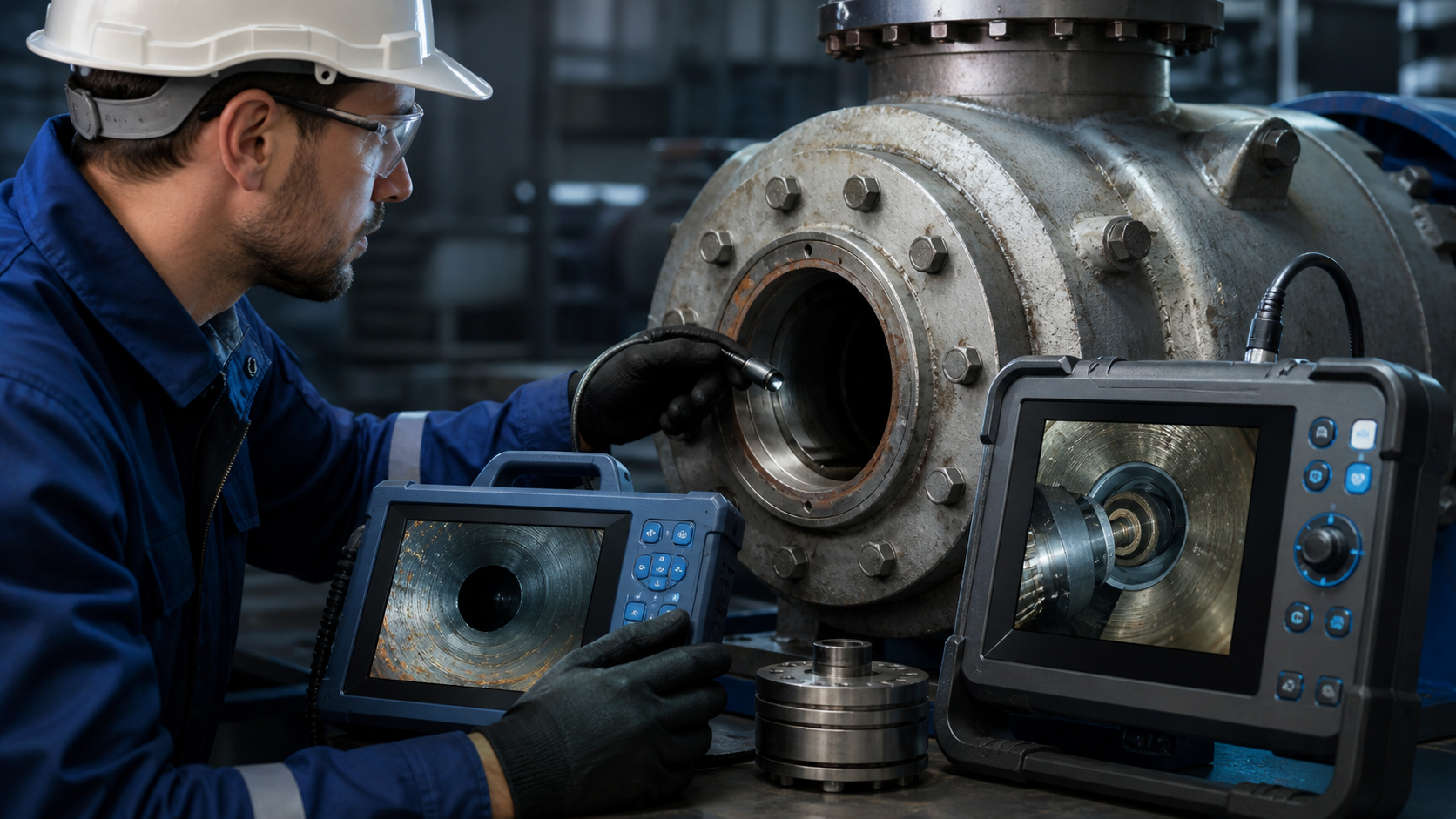
Key factors to consider before buying a borescope.
READ MORE arrow_forward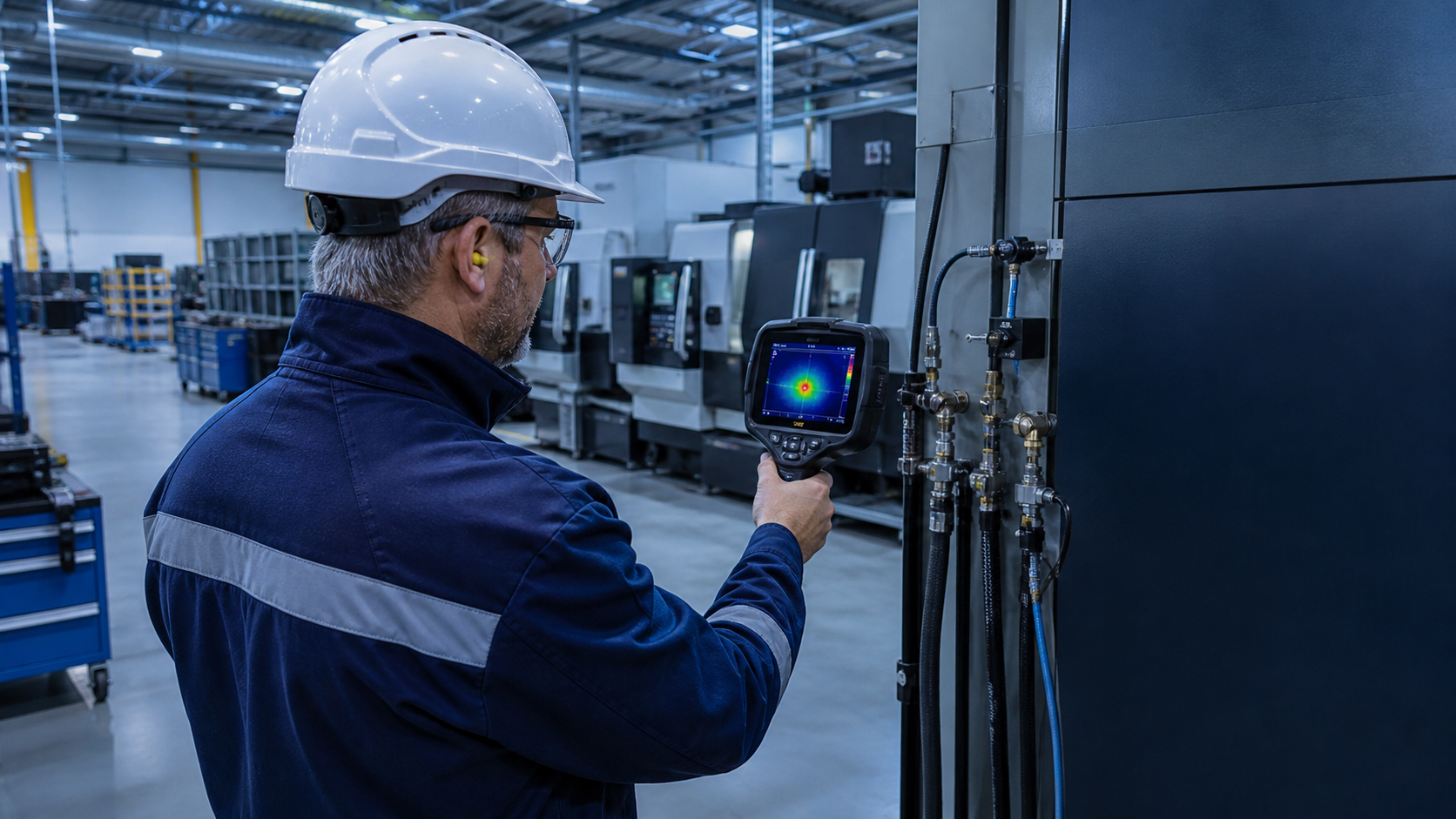
Learn practical steps to identify and eliminate air leaks.
READ MORE arrow_forward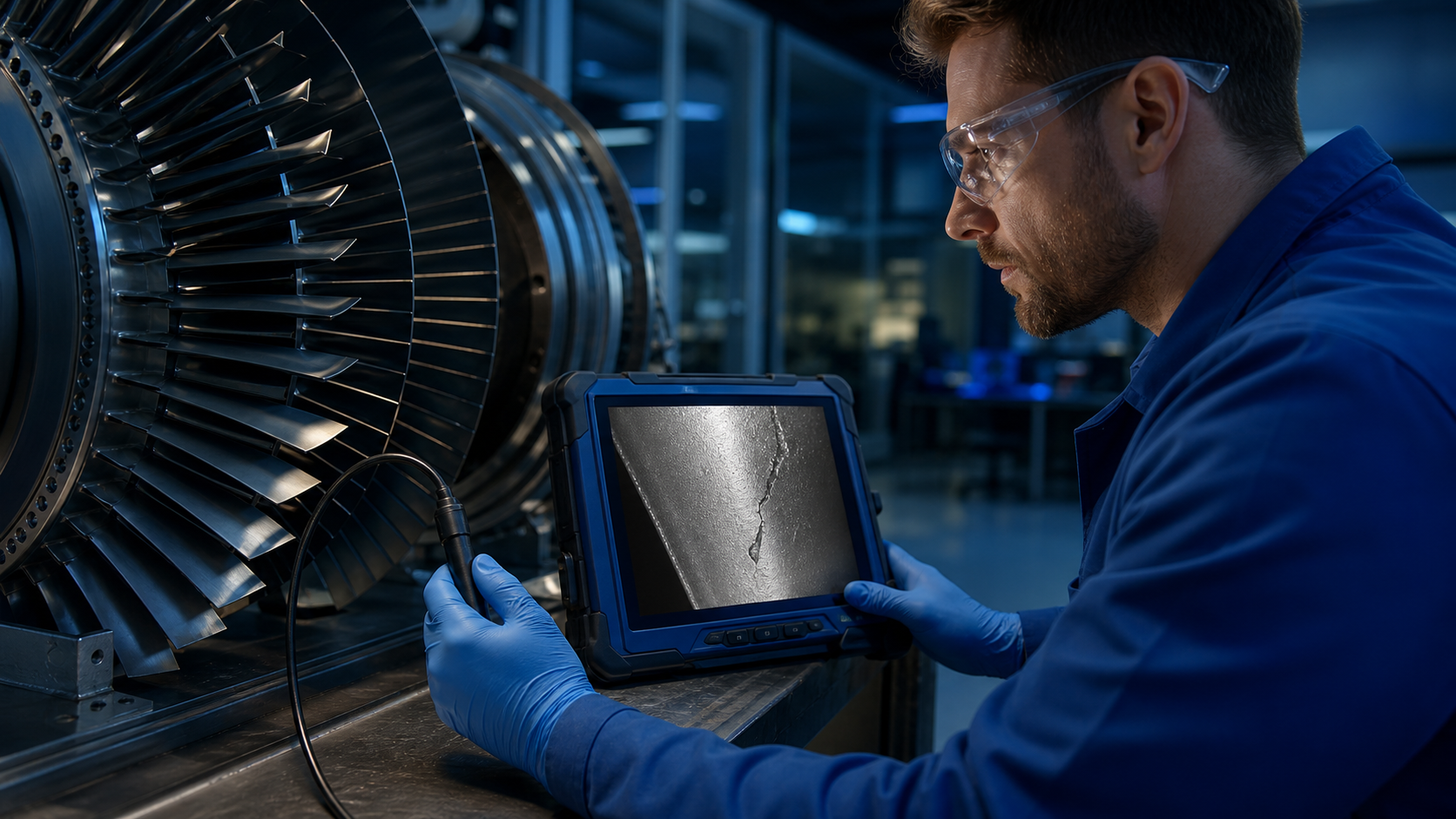
Effective image quality comes from optics, illumination, processing and recording working together.
READ MORE arrow_forward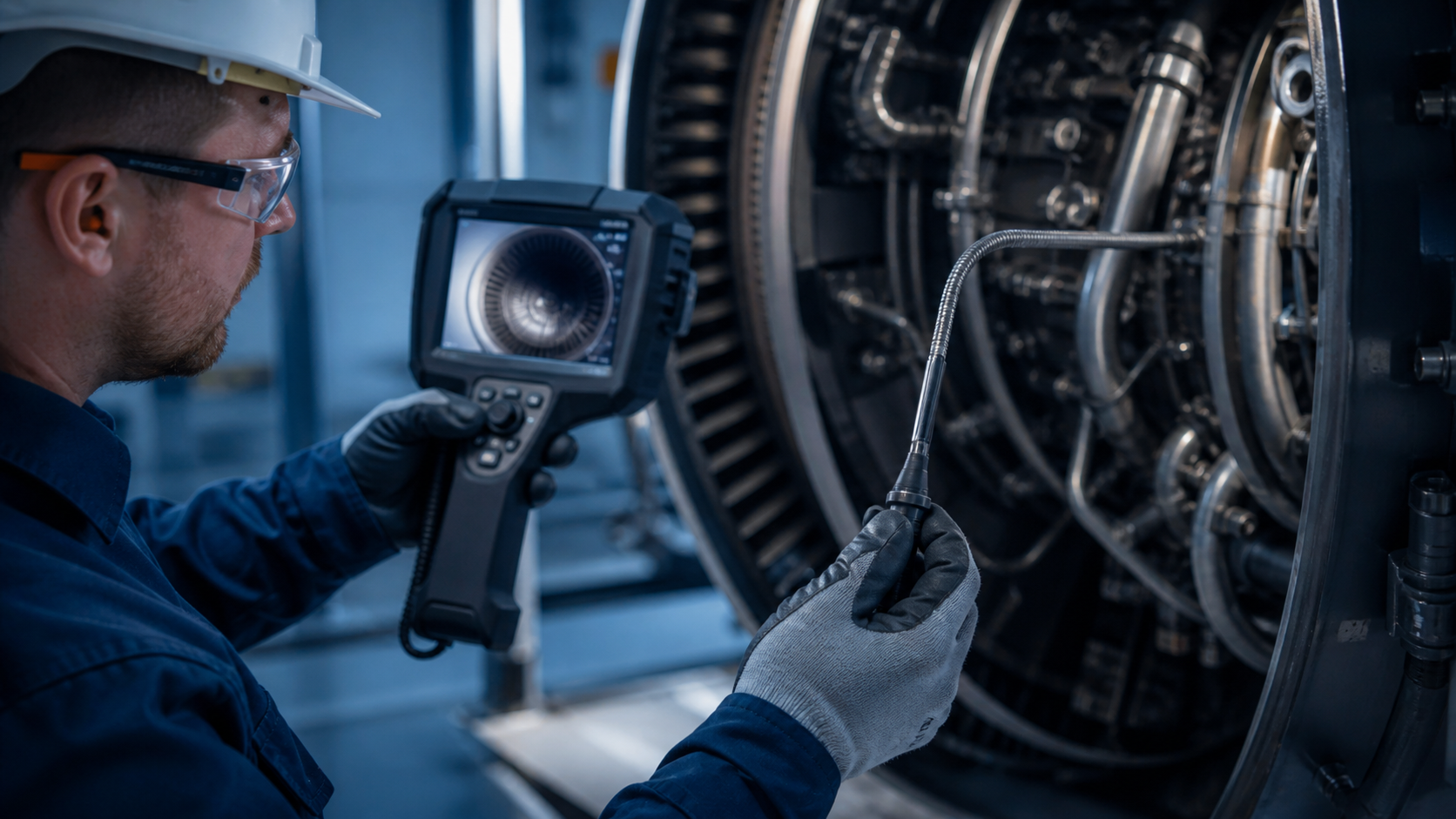
Resetting the articulated probe before insertion, removal and shutdown protects the guide structure and improves handling.
READ MORE arrow_forward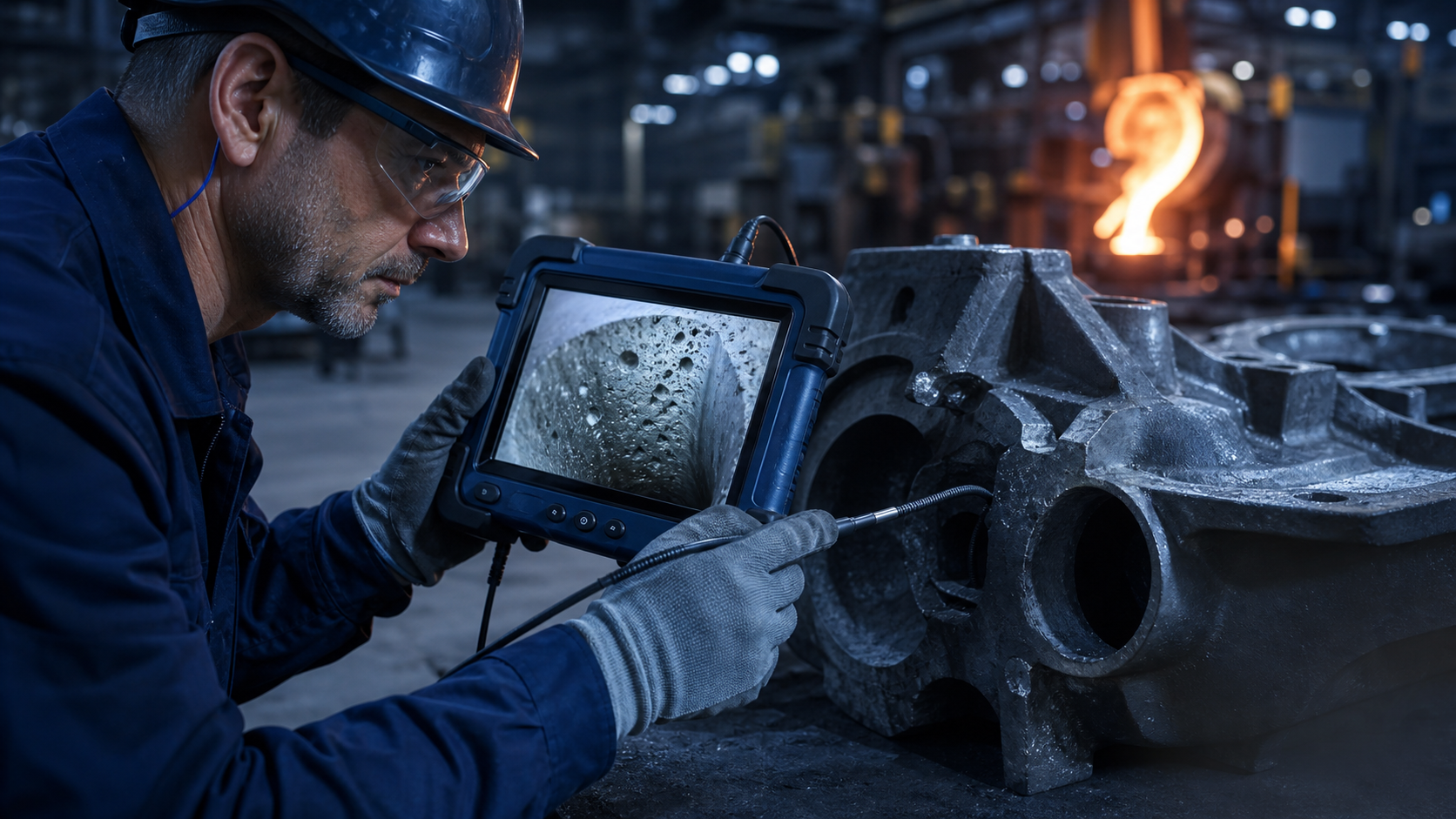
Useful inspection quality comes from the complete optical, illumination, processing and recording chain—not pixel count alone.
READ MORE arrow_forward
Temperature, media, access geometry and moving equipment should be checked before an inspection starts.
READ MORE arrow_forward
Controlled access and consistent image positions help protect the engine and improve review quality.
READ MORE arrow_forward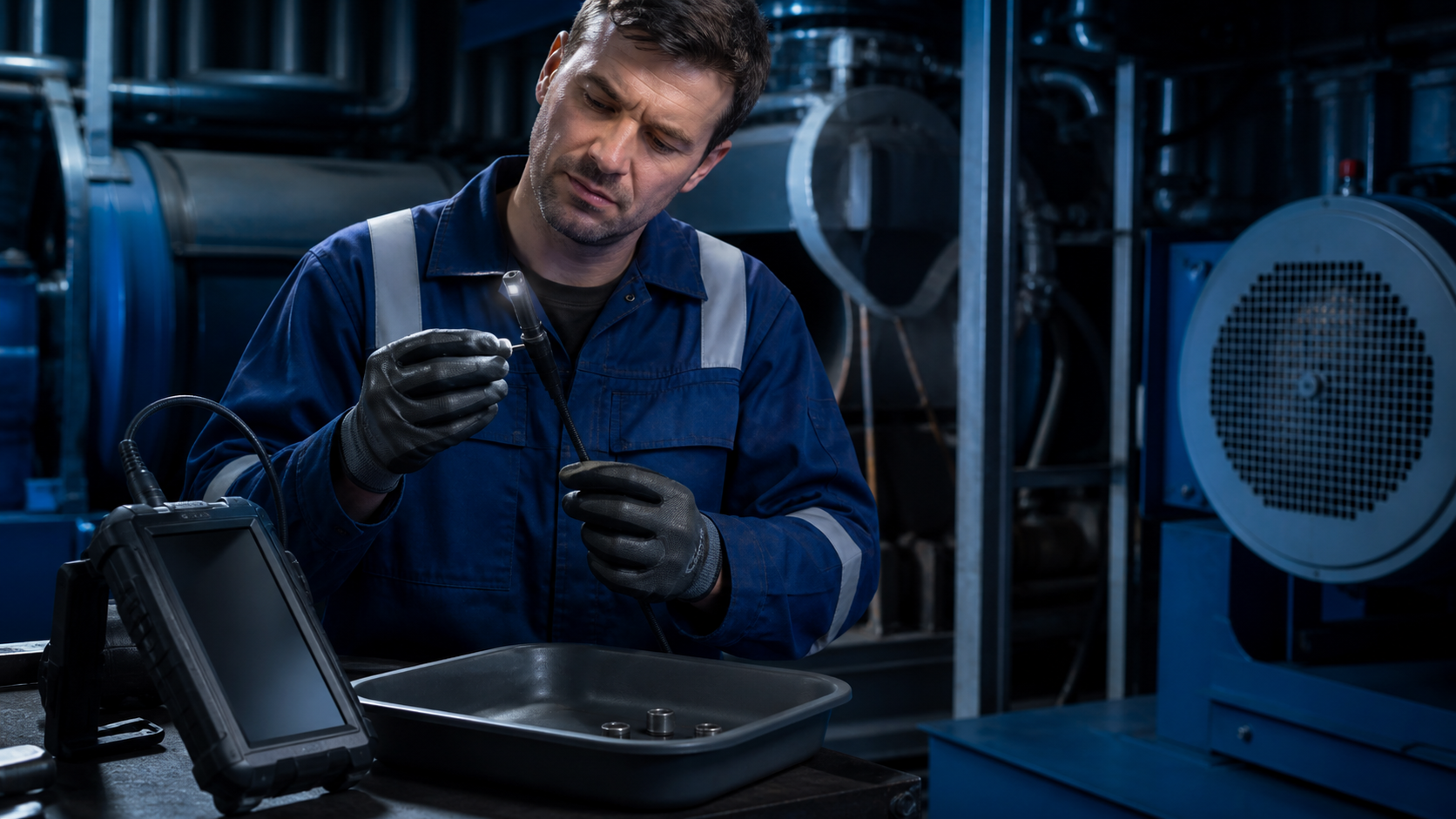
Inspection resistance, contamination and tight bends are warning signs that should be handled early.
READ MORE arrow_forward
Access, bends, deposits and documentation requirements determine the right visual-inspection setup.
READ MORE arrow_forward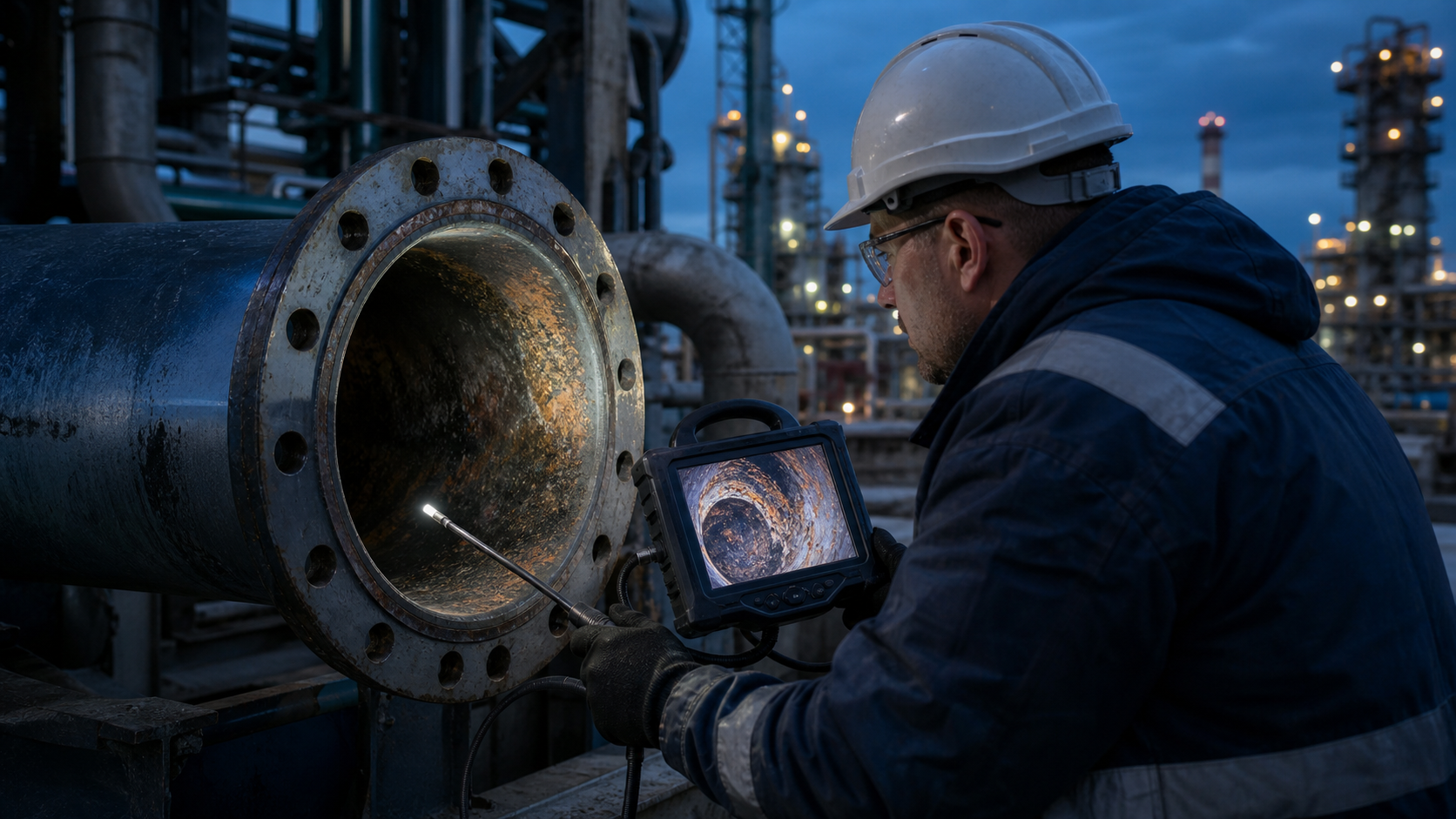
Remote visual inspection records corrosion, deposits and joint condition without extensive pipe dismantling.
READ MORE arrow_forward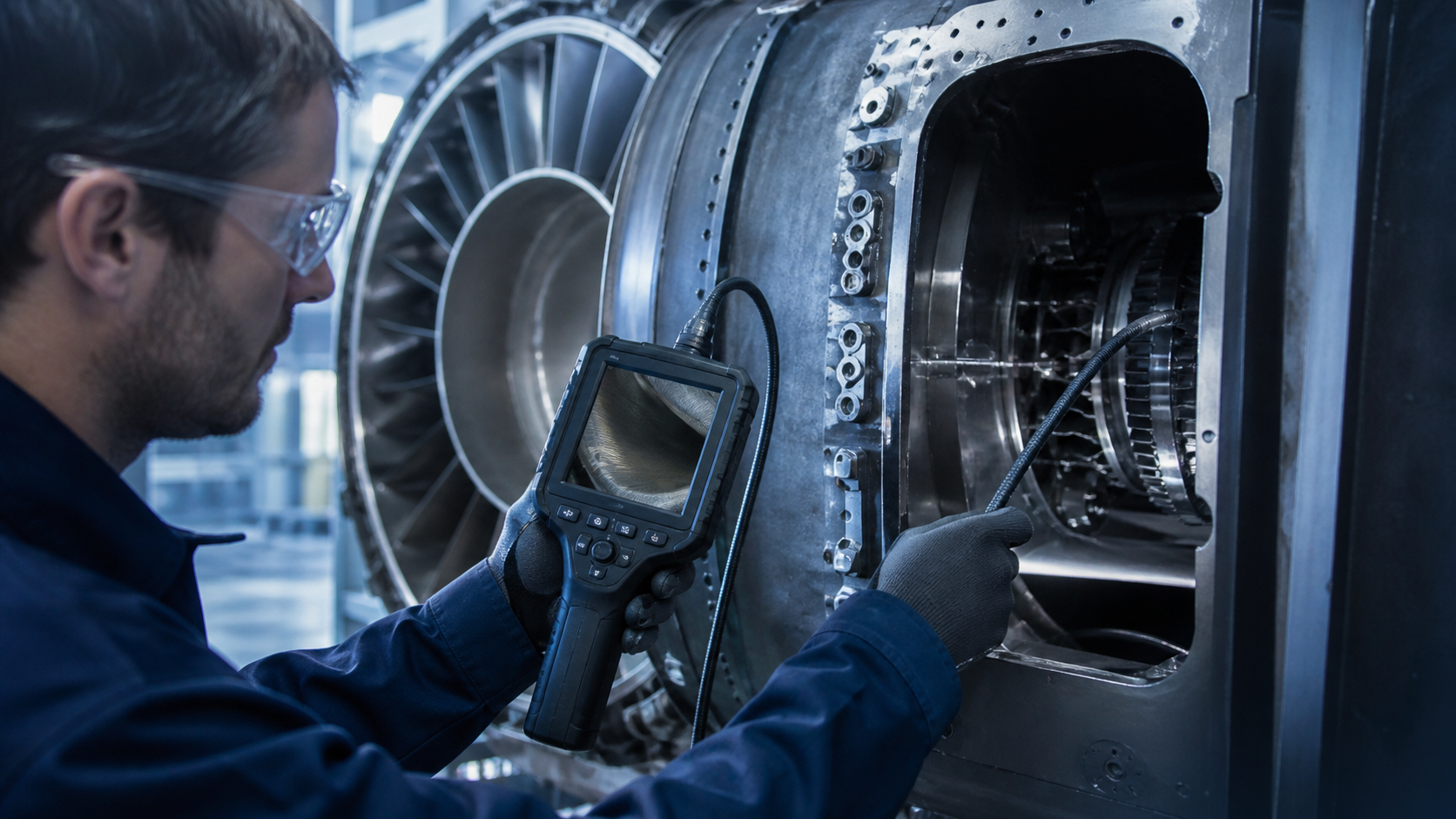
An industrial borescope brings a camera and illumination into areas that cannot be observed directly.
READ MORE arrow_forward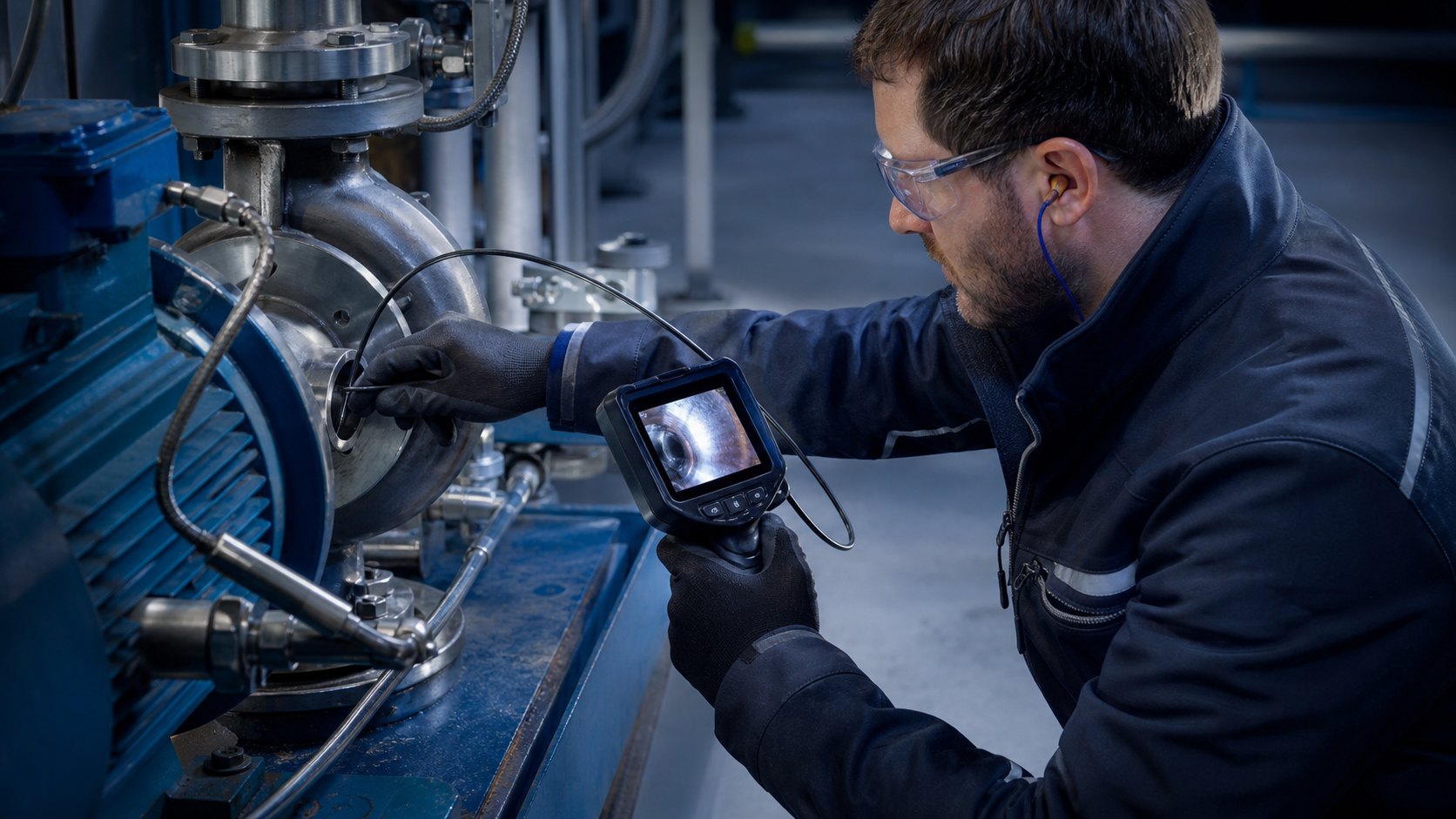
Match probe diameter, length, articulation, lighting and documentation to the task.
READ MORE arrow_forward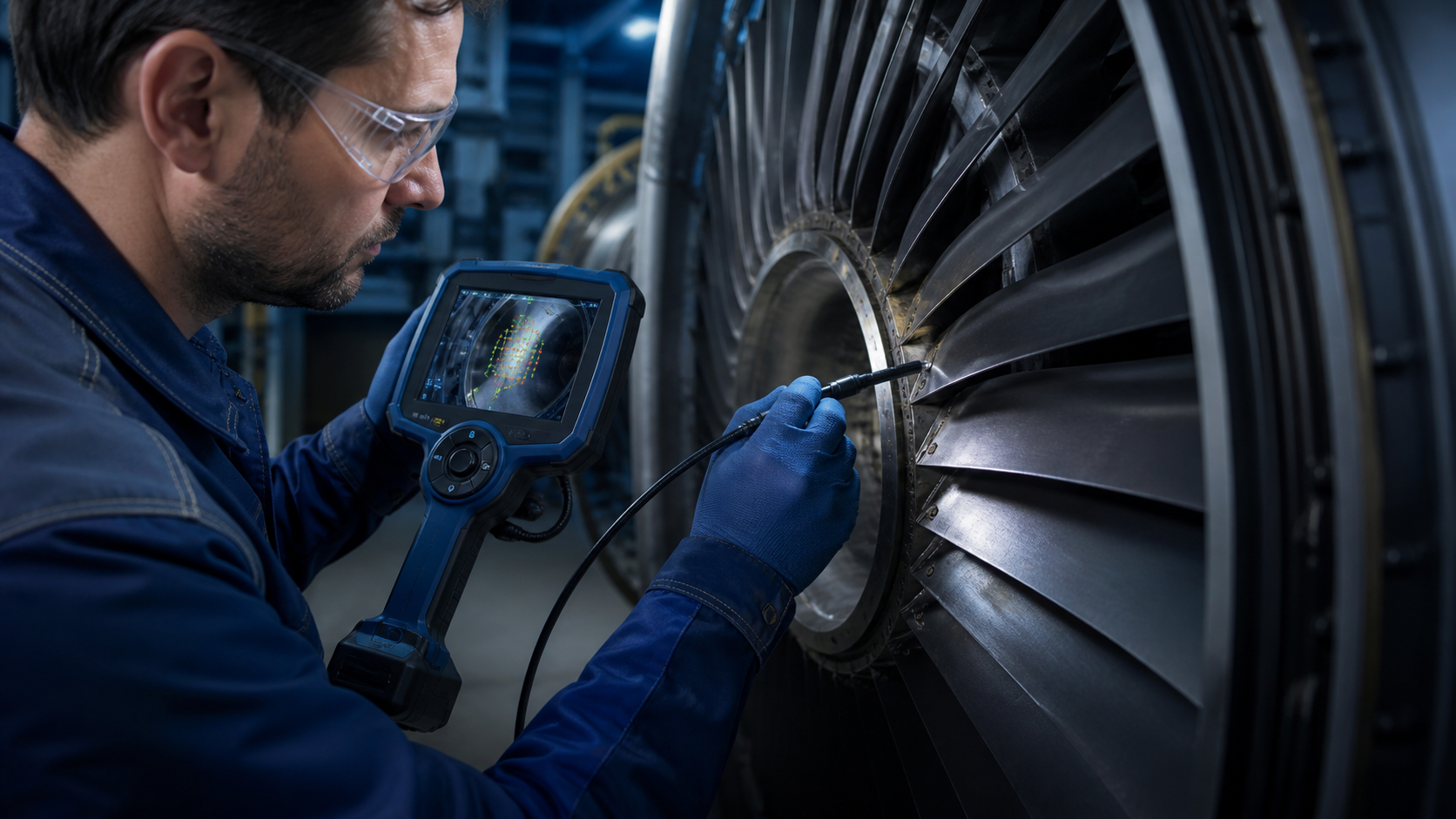
Understand when dimensional defect evidence is required and how to capture it.
READ MORE arrow_forward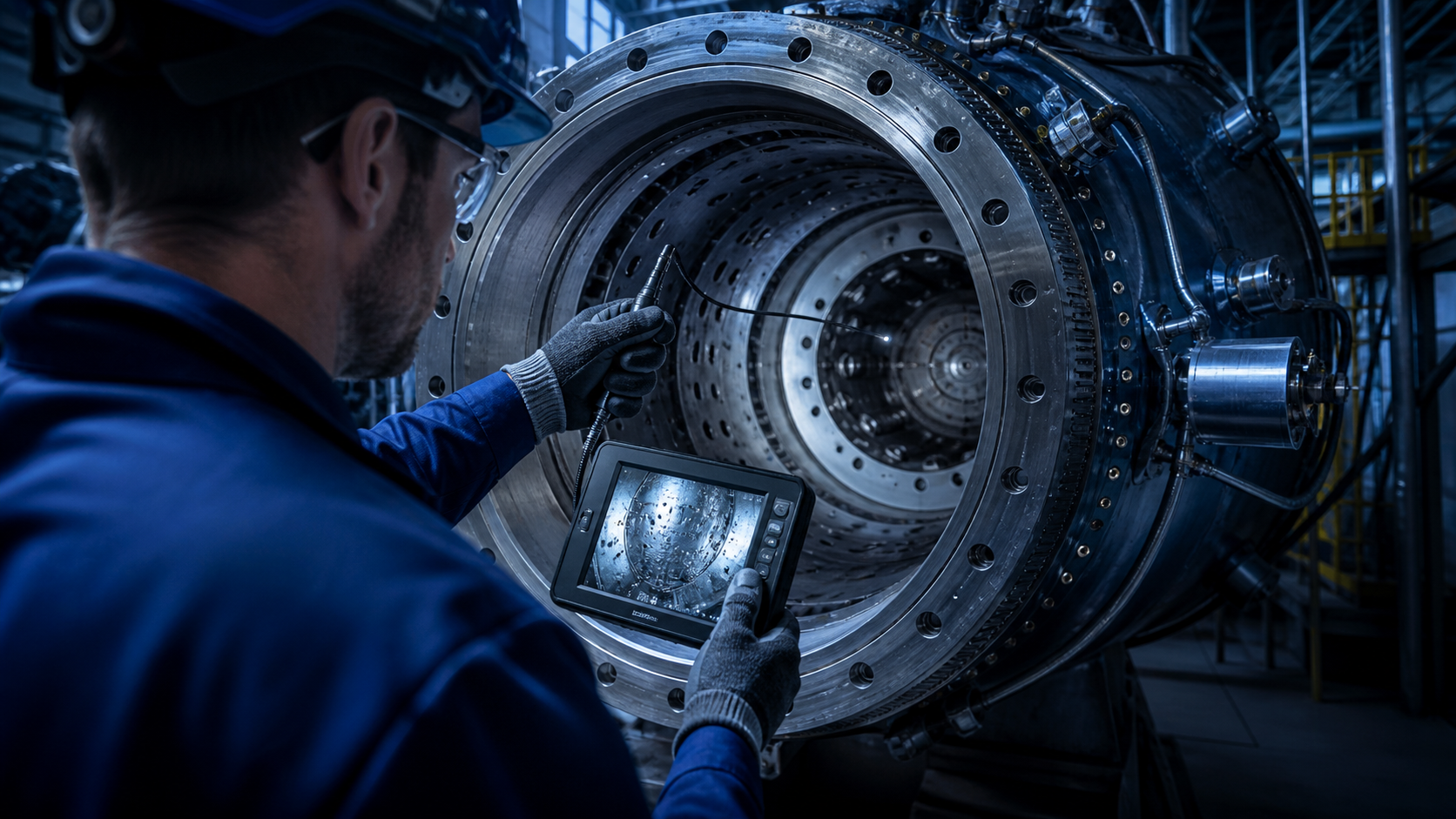
Plan insertion routes, reference positions and image records for internal components.
READ MORE arrow_forward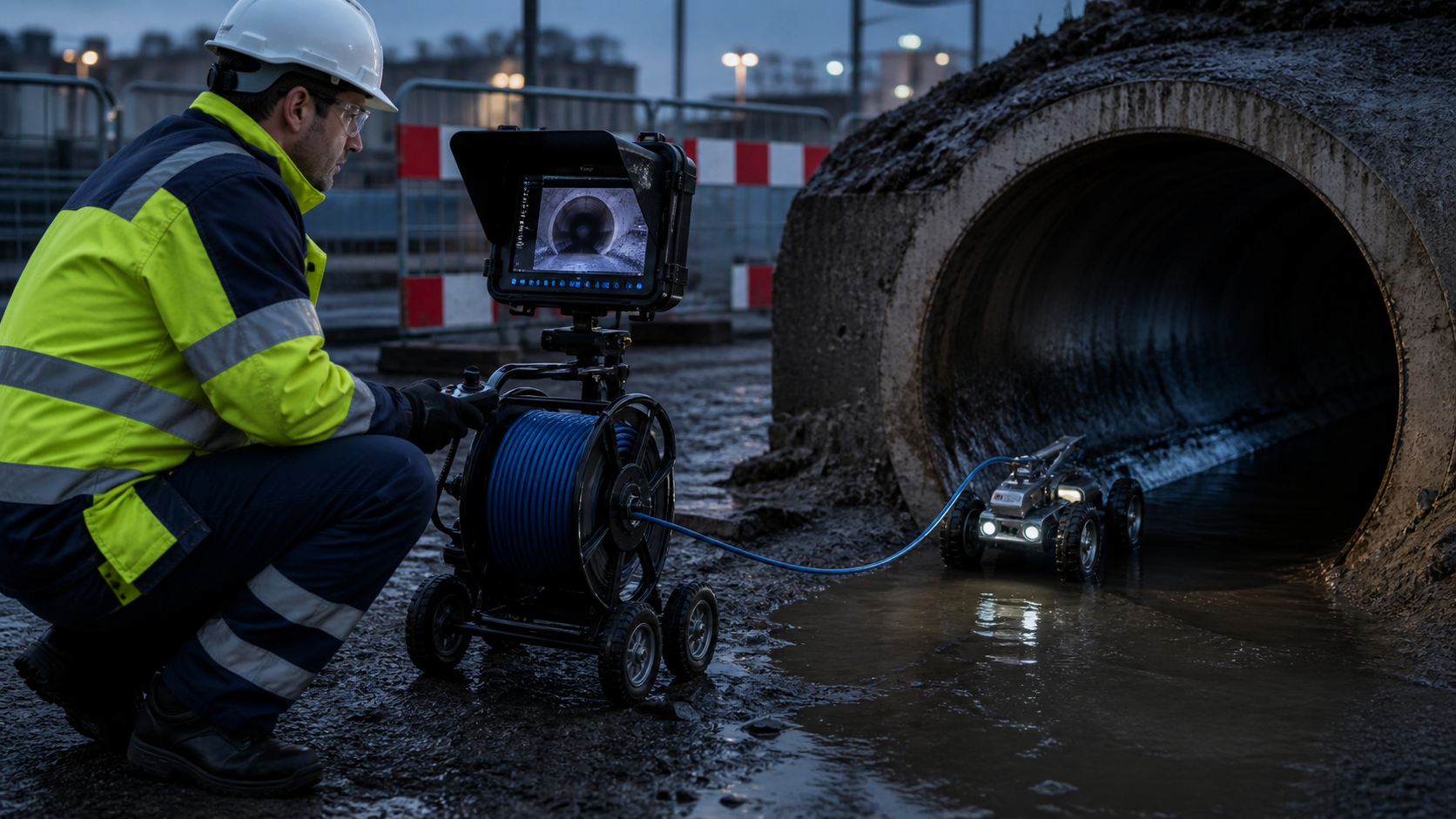
Probe and crawler systems cover different pipe diameters, distances and access conditions.
READ MORE arrow_forward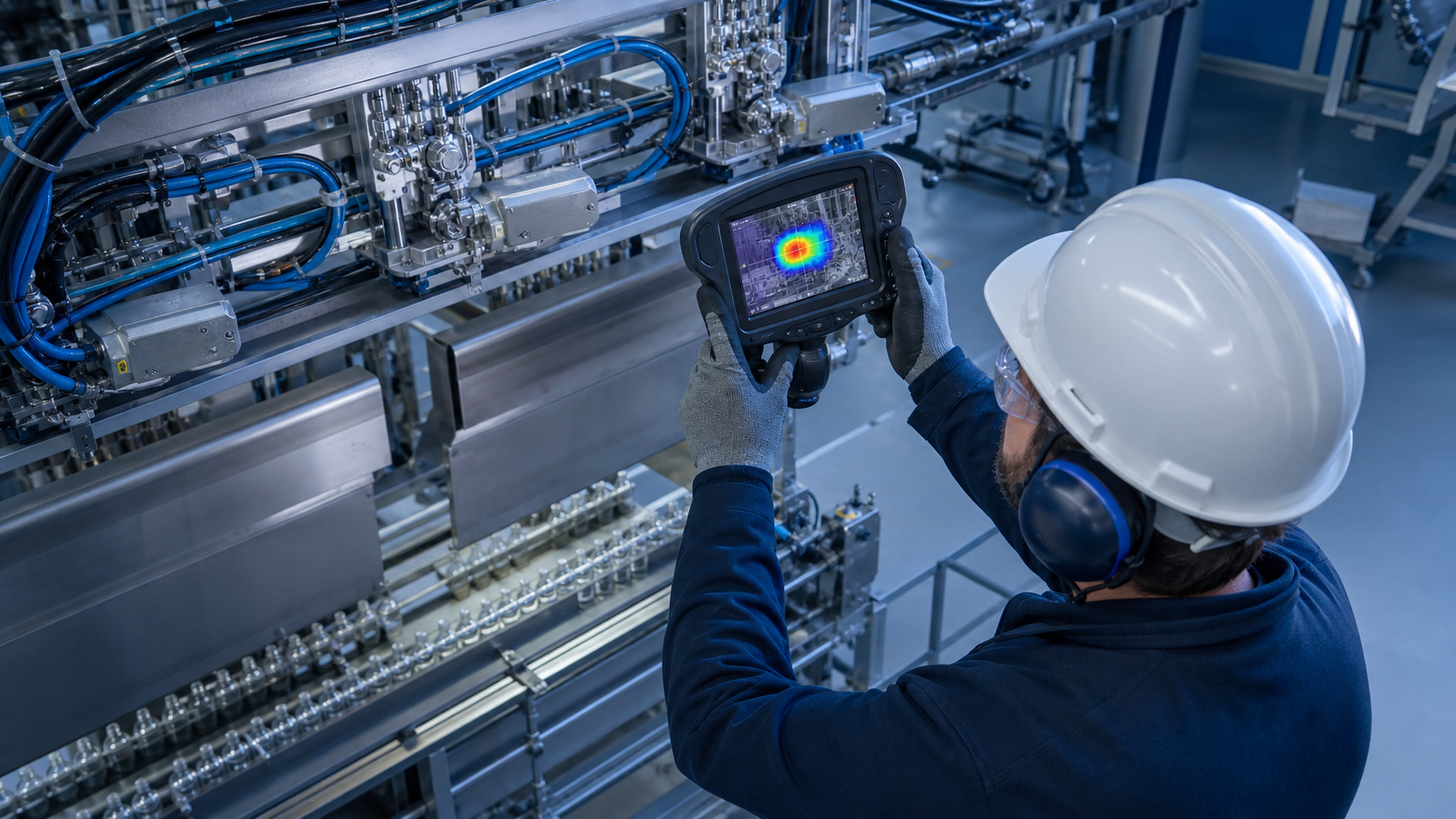
From high-frequency signal acquisition to visual localization and repair verification.
READ MORE arrow_forward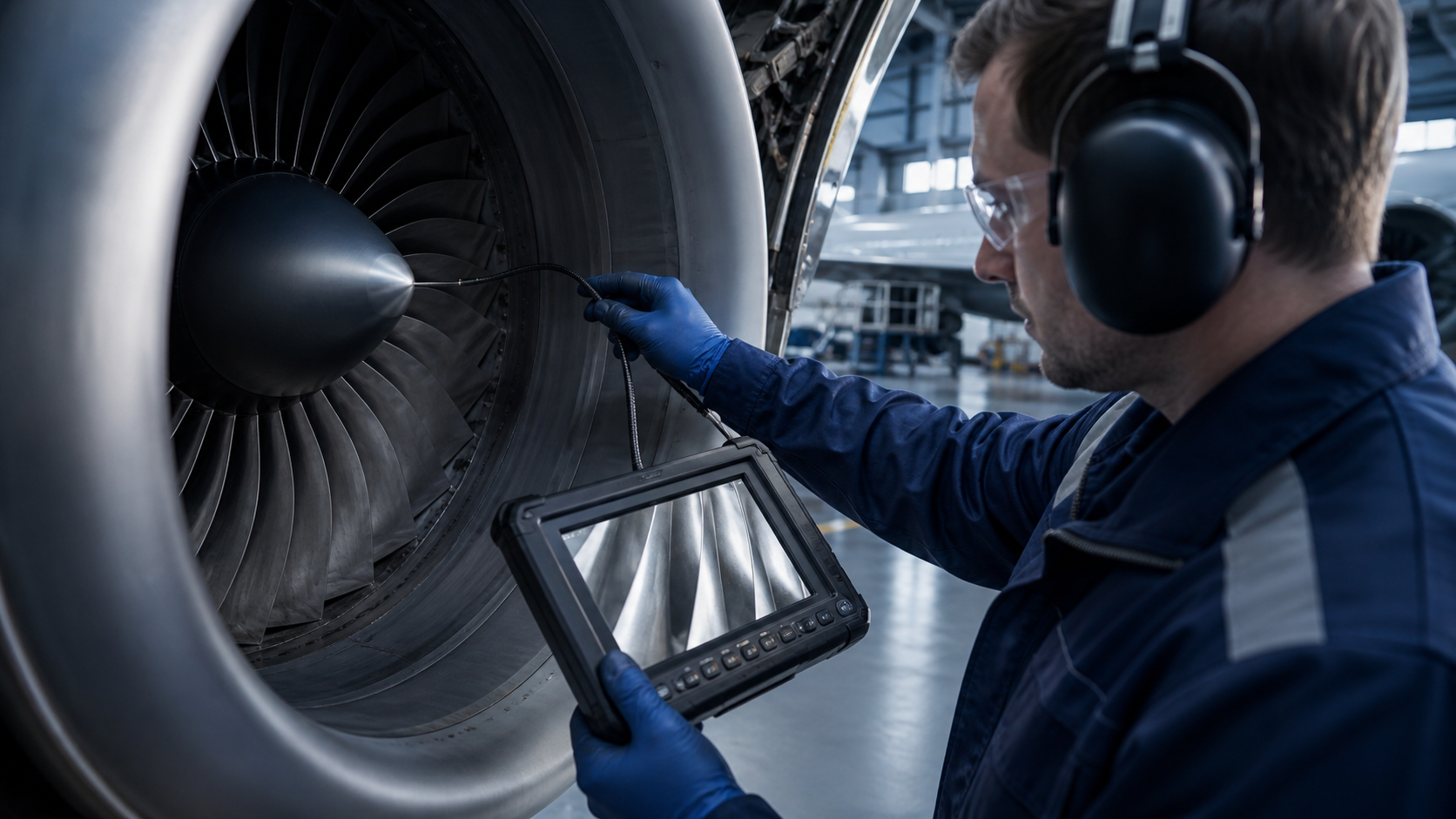
A repeatable route helps document blades, chambers and internal surfaces during limited maintenance windows.
READ MORE arrow_forward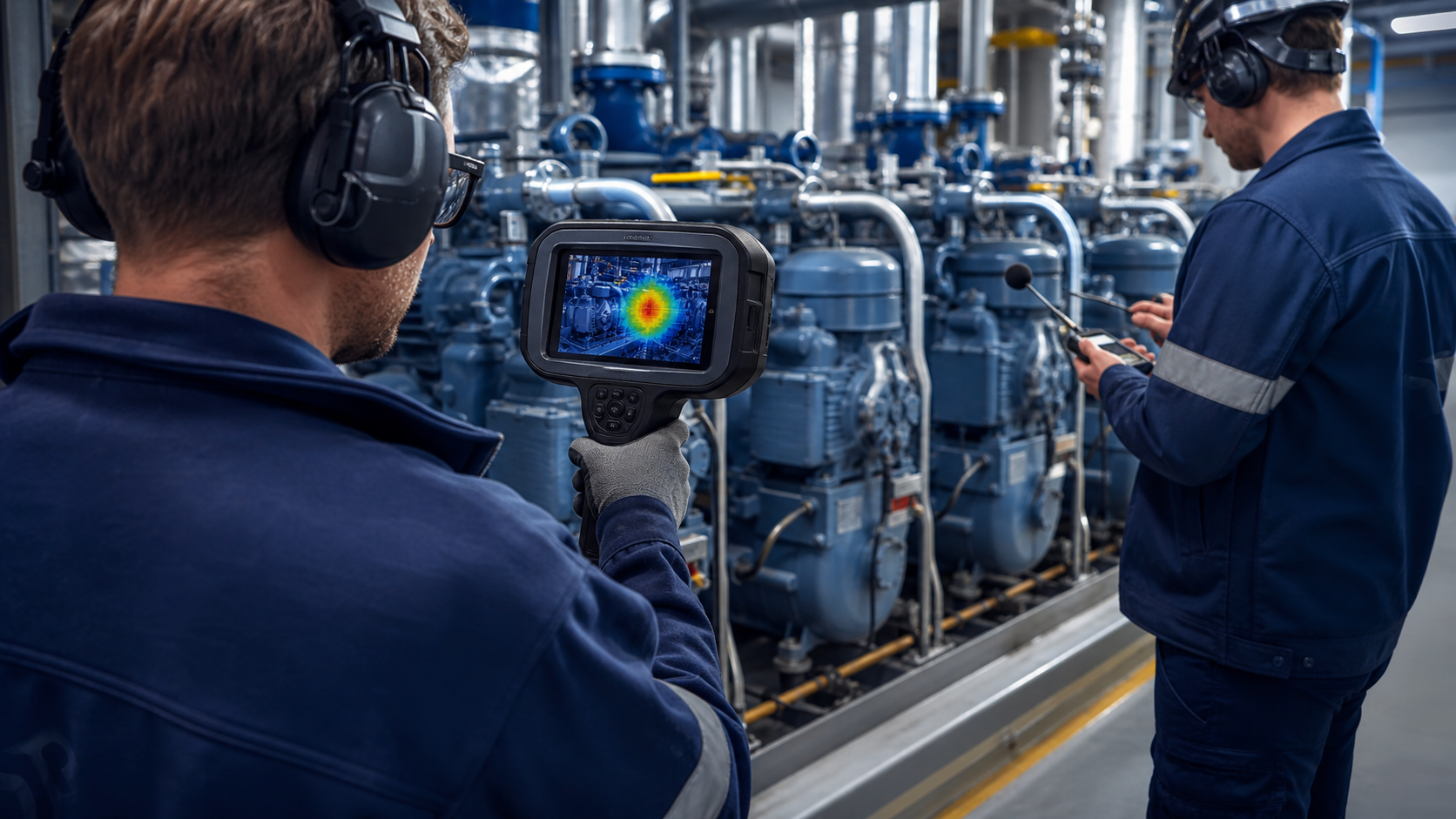
Compare localization speed, noisy-site usability and recordable evidence.
READ MORE arrow_forward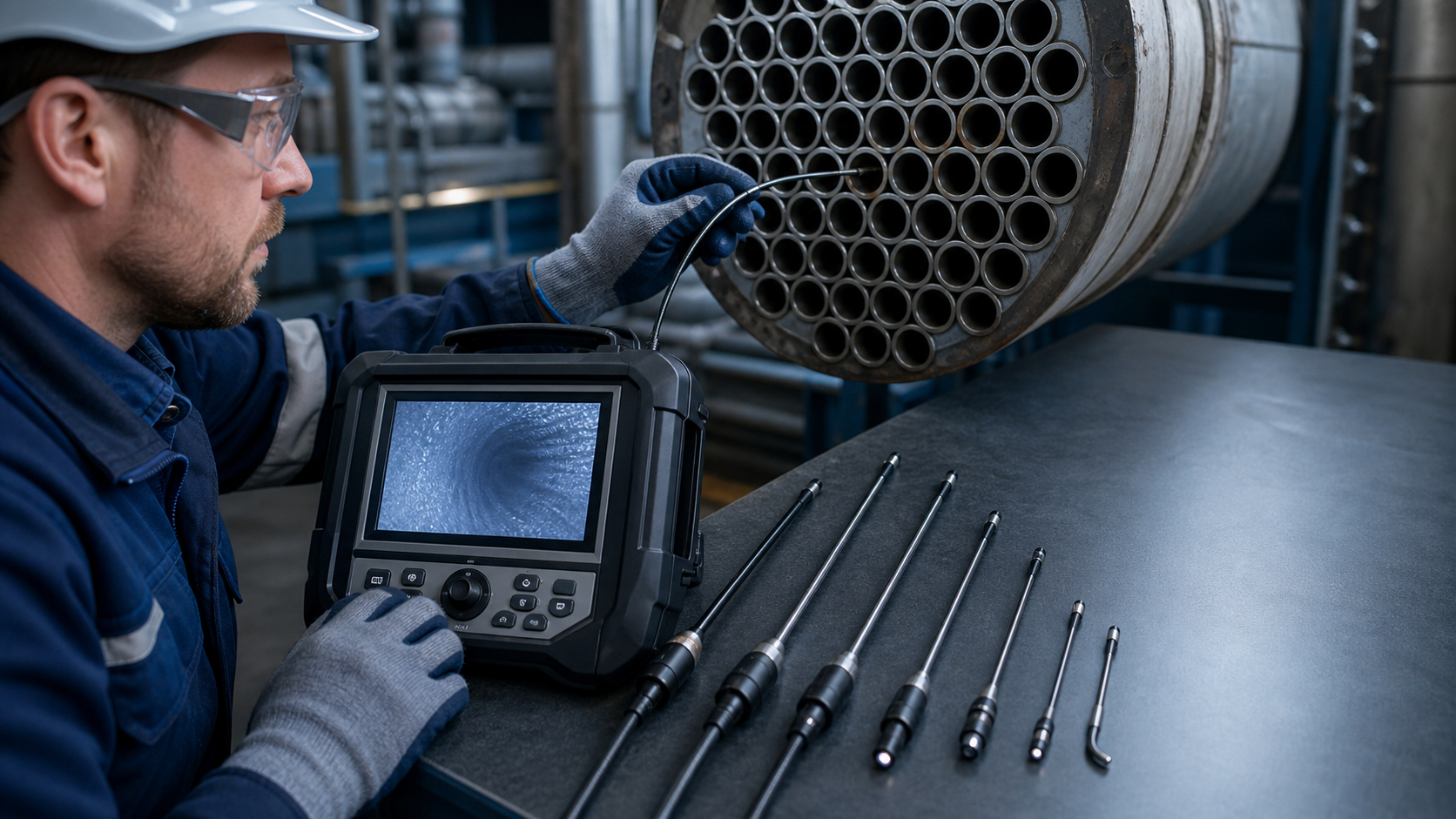
Start from the smallest opening, working distance and required viewing direction.
READ MORE arrow_forward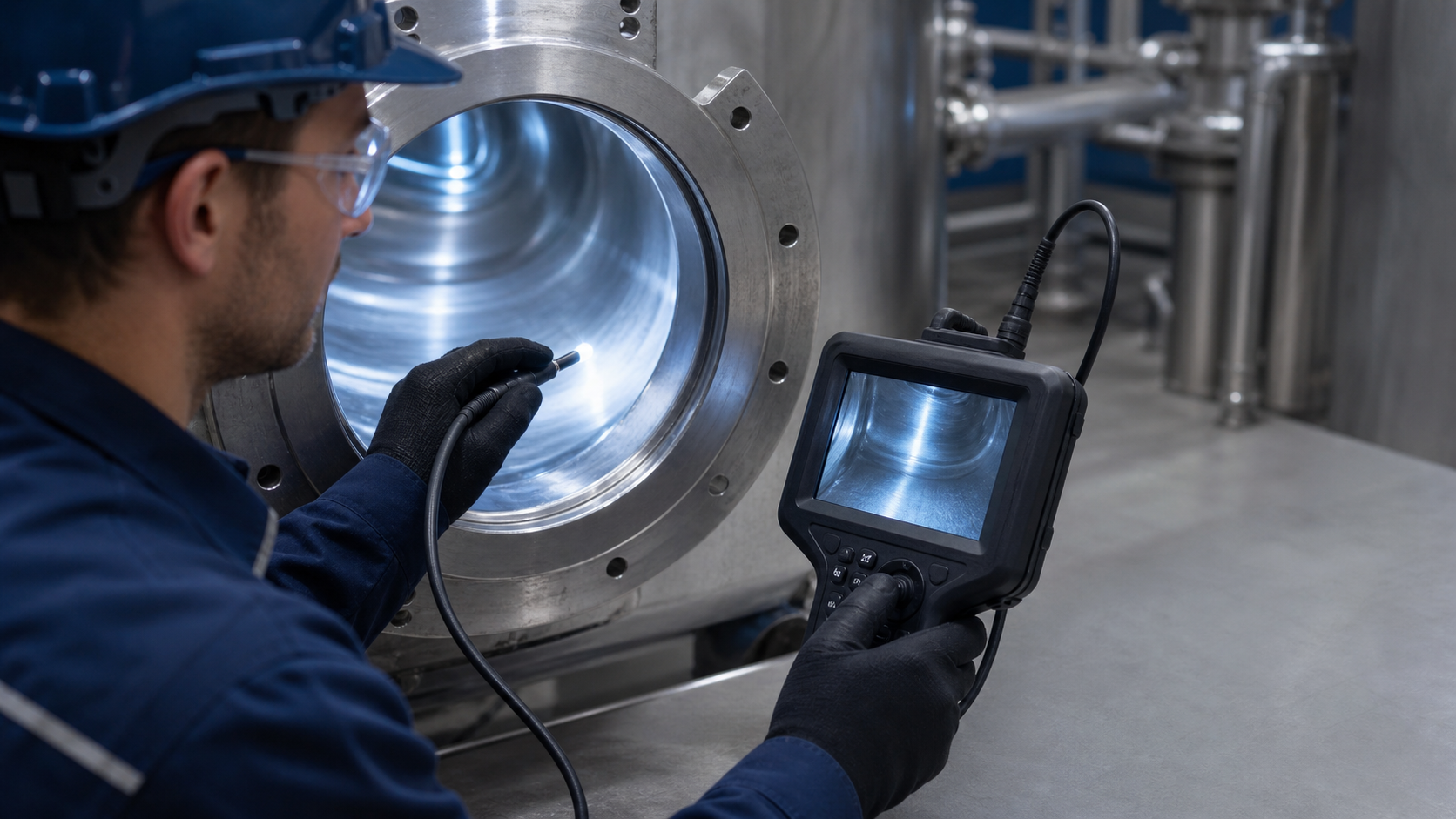
Control reflections, distance and exposure to produce useful visual evidence.
READ MORE arrow_forward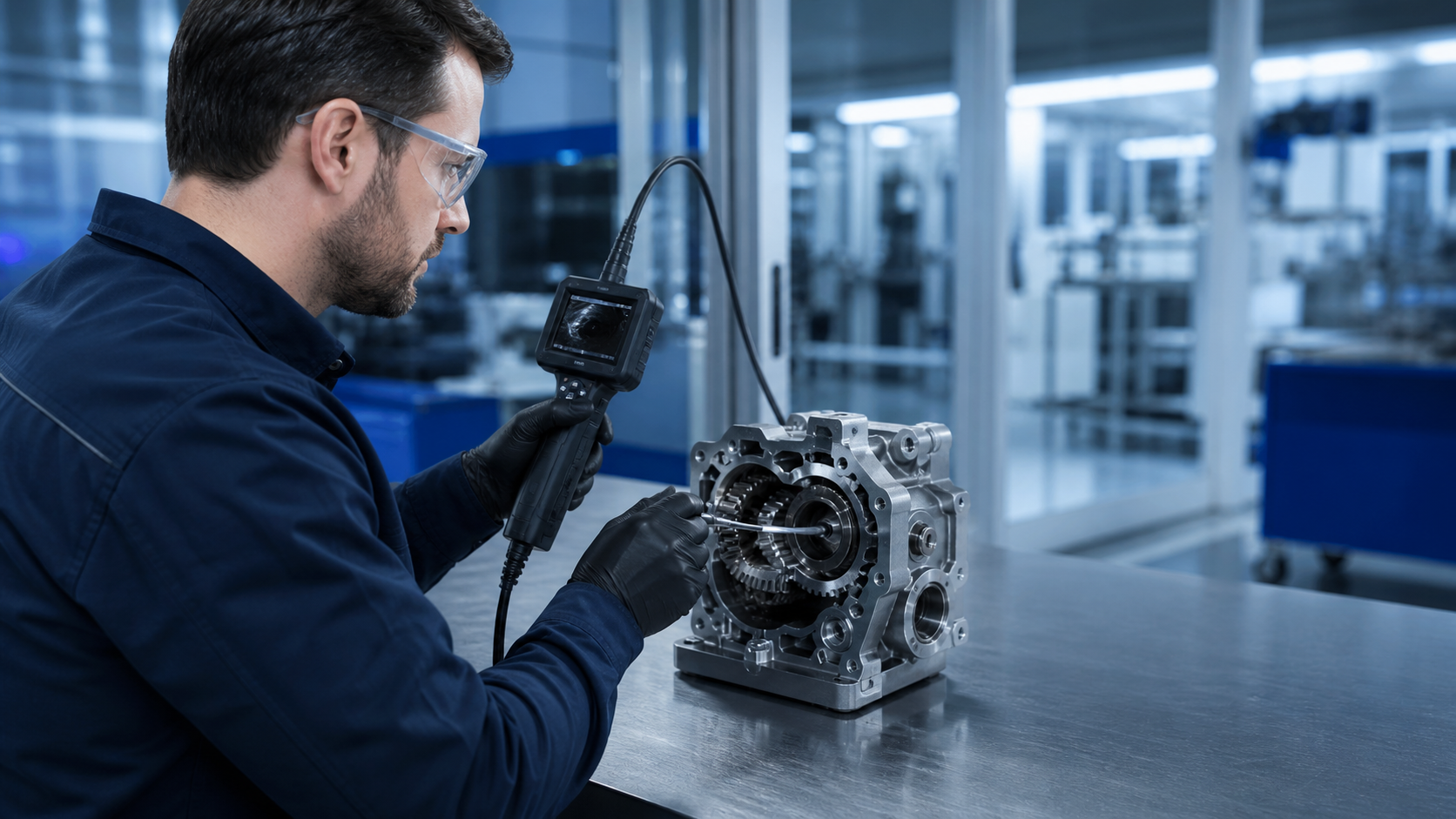
A compact probe and electronic focus support clear observation in narrow precision components.
READ MORE arrow_forward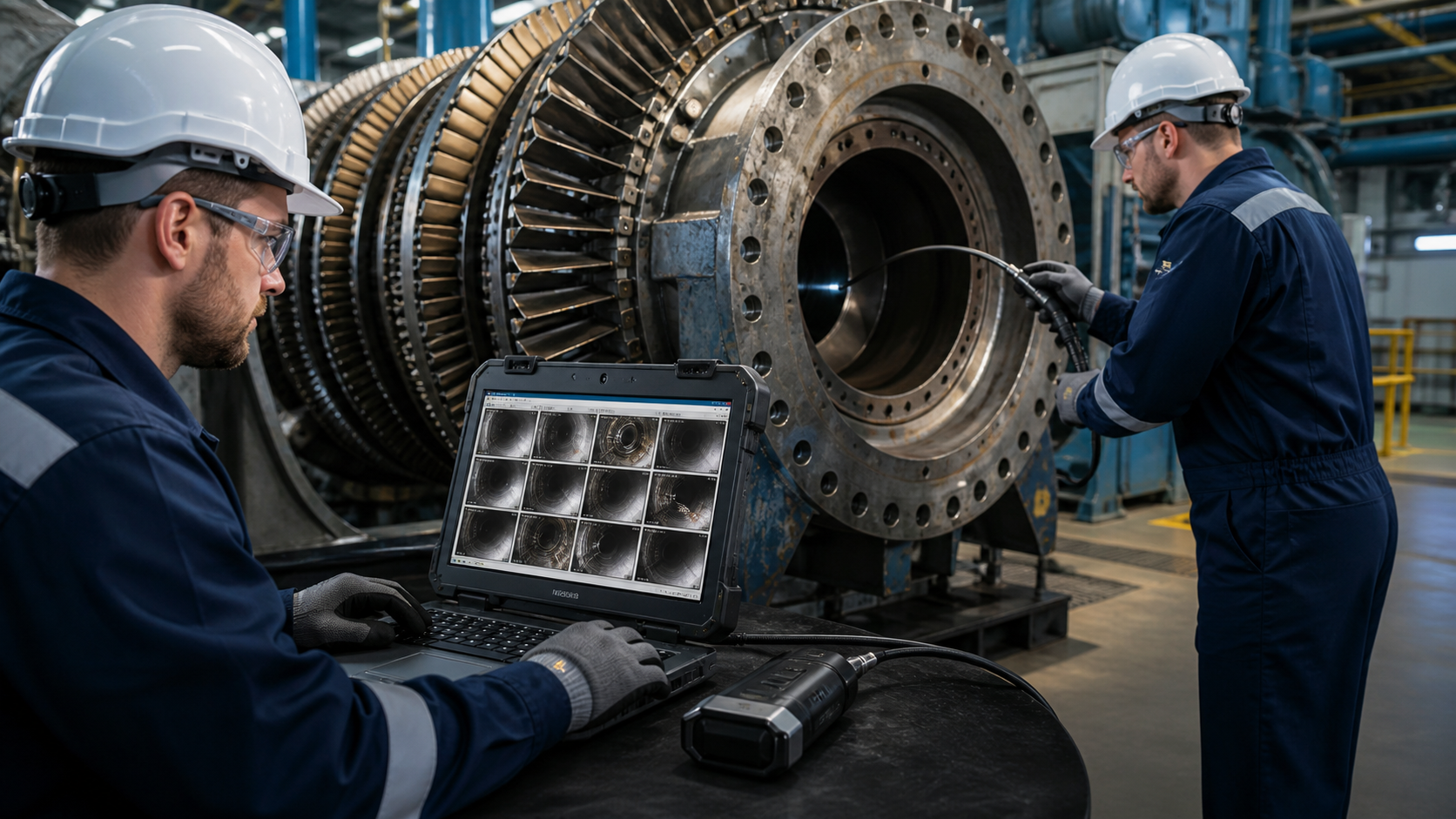
A naming, context and severity framework for comparable records.
READ MORE arrow_forward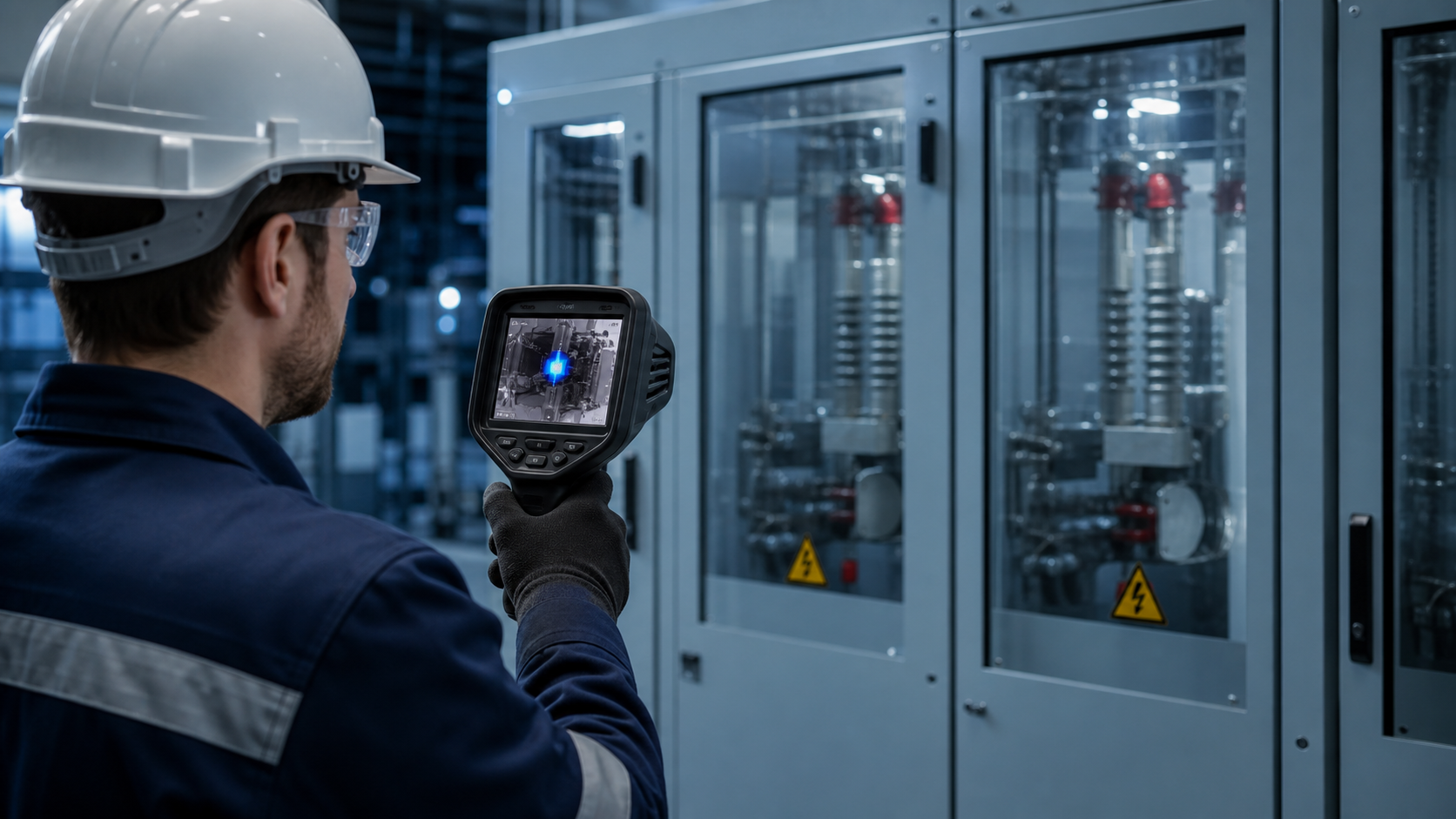
Plan safe routes and interpret acoustic evidence around electrical assets.
READ MORE arrow_forward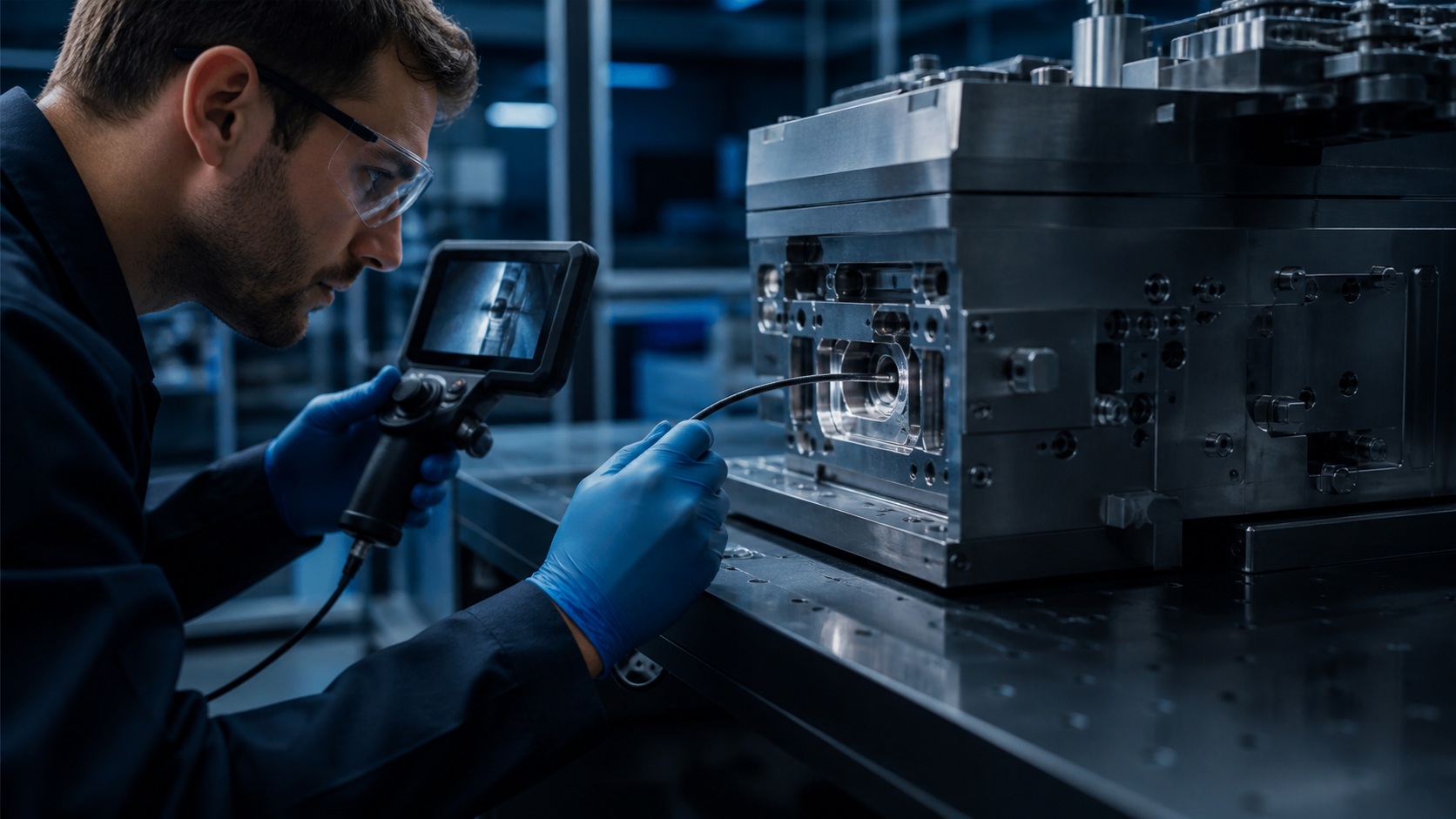
An ultra-fine probe extends visual inspection to miniature channels and precision assemblies.
READ MORE arrow_forward
Improve repeatability by recording operating condition, range and background noise.
READ MORE arrow_forward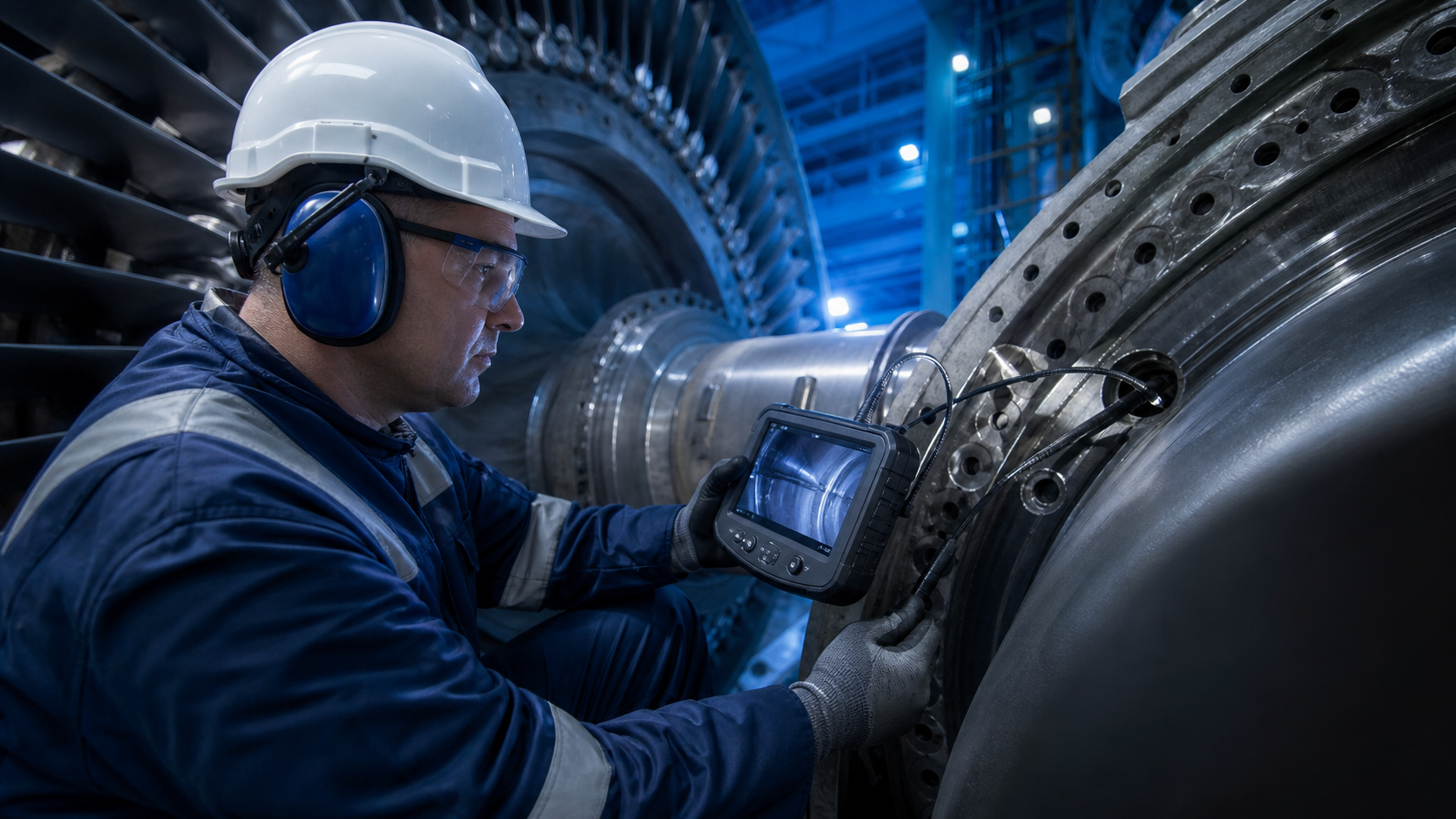
Traceable images and dimensional evidence support maintenance decisions during planned outage work.
READ MORE arrow_forward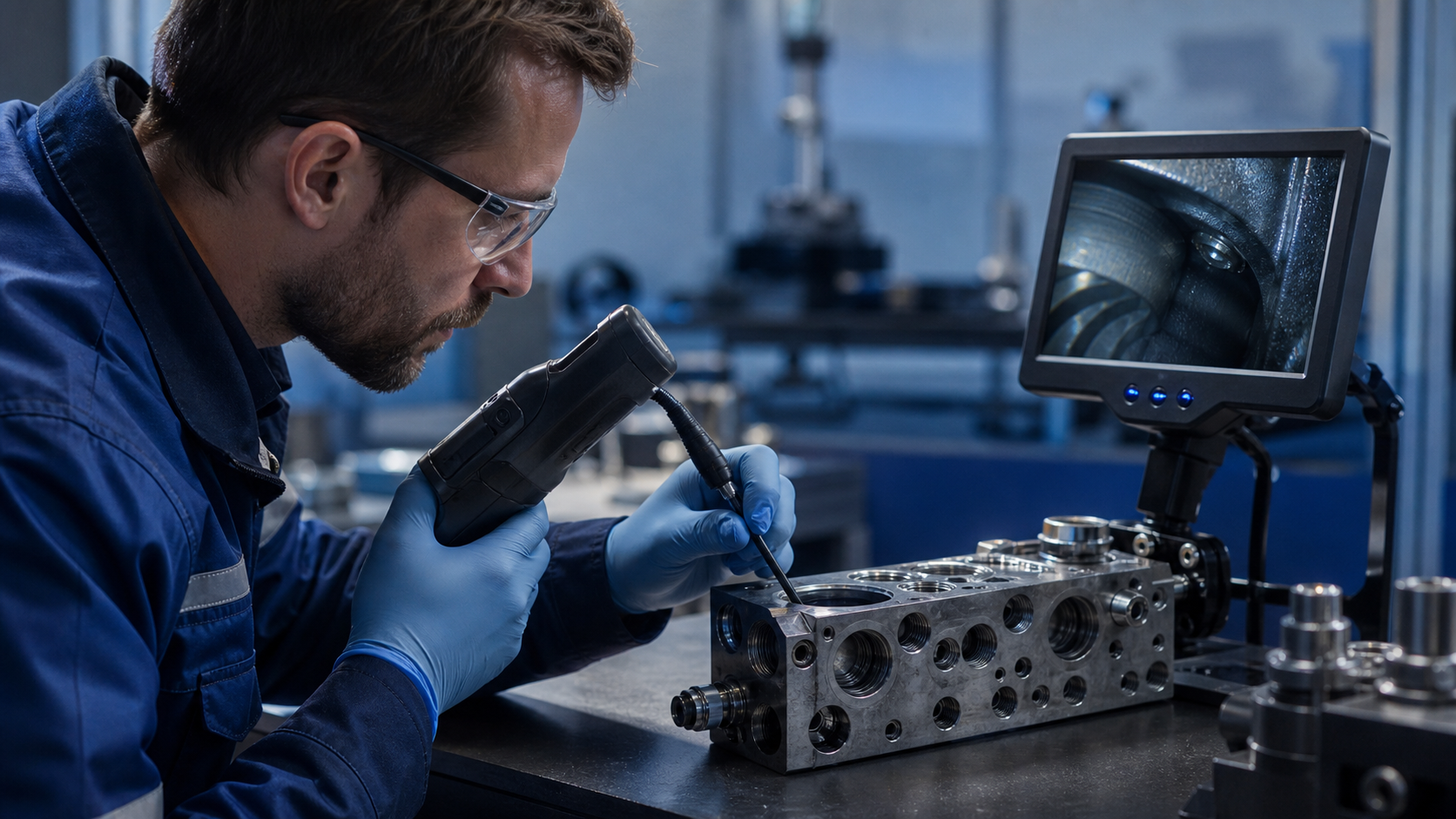
A slim imaging path supports detailed review of hydraulic, casting and precision-machined internal passages.
READ MORE arrow_forward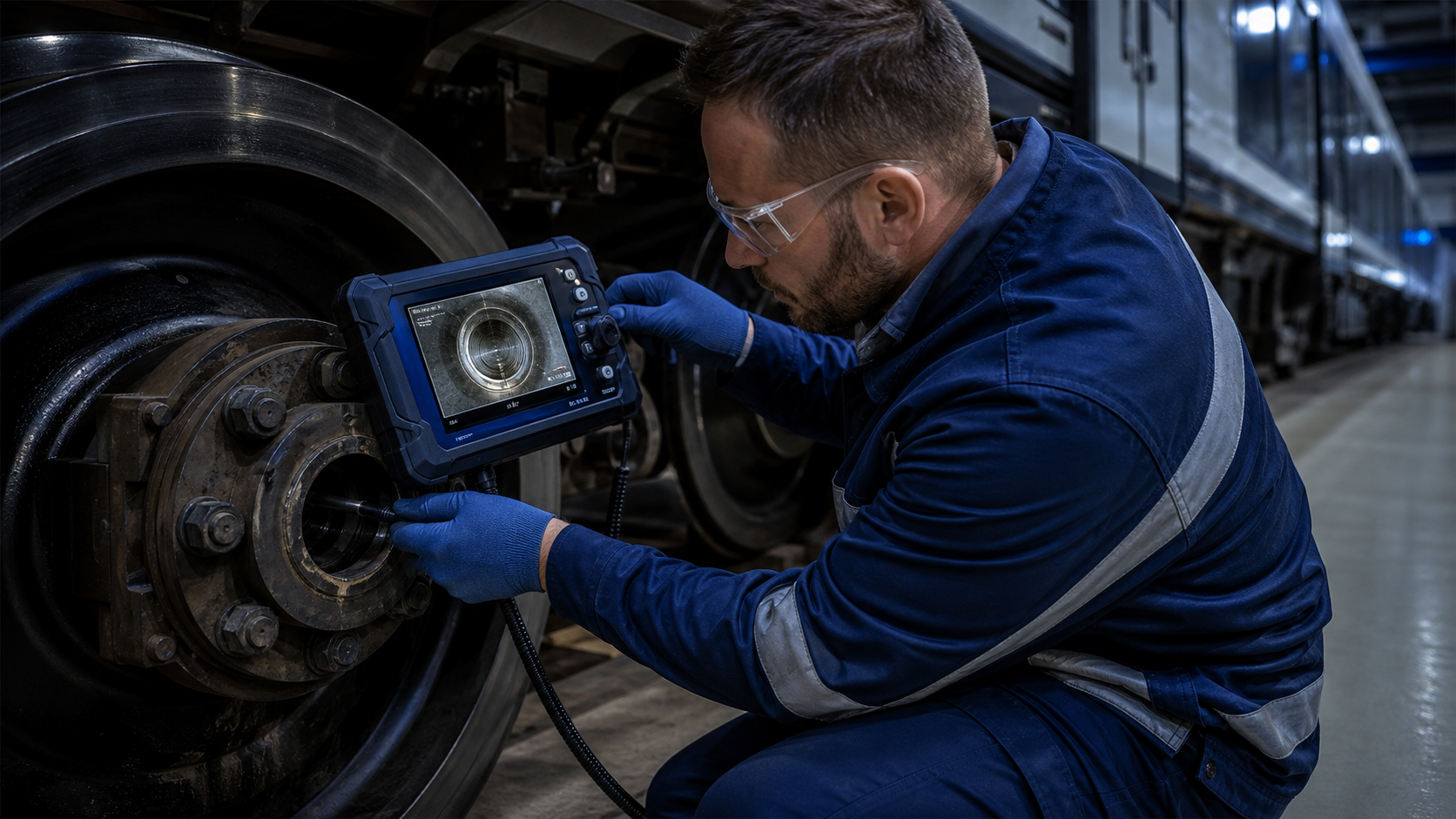
Adjustable focus helps operators move between overview and close surface observation during field inspection.
READ MORE arrow_forward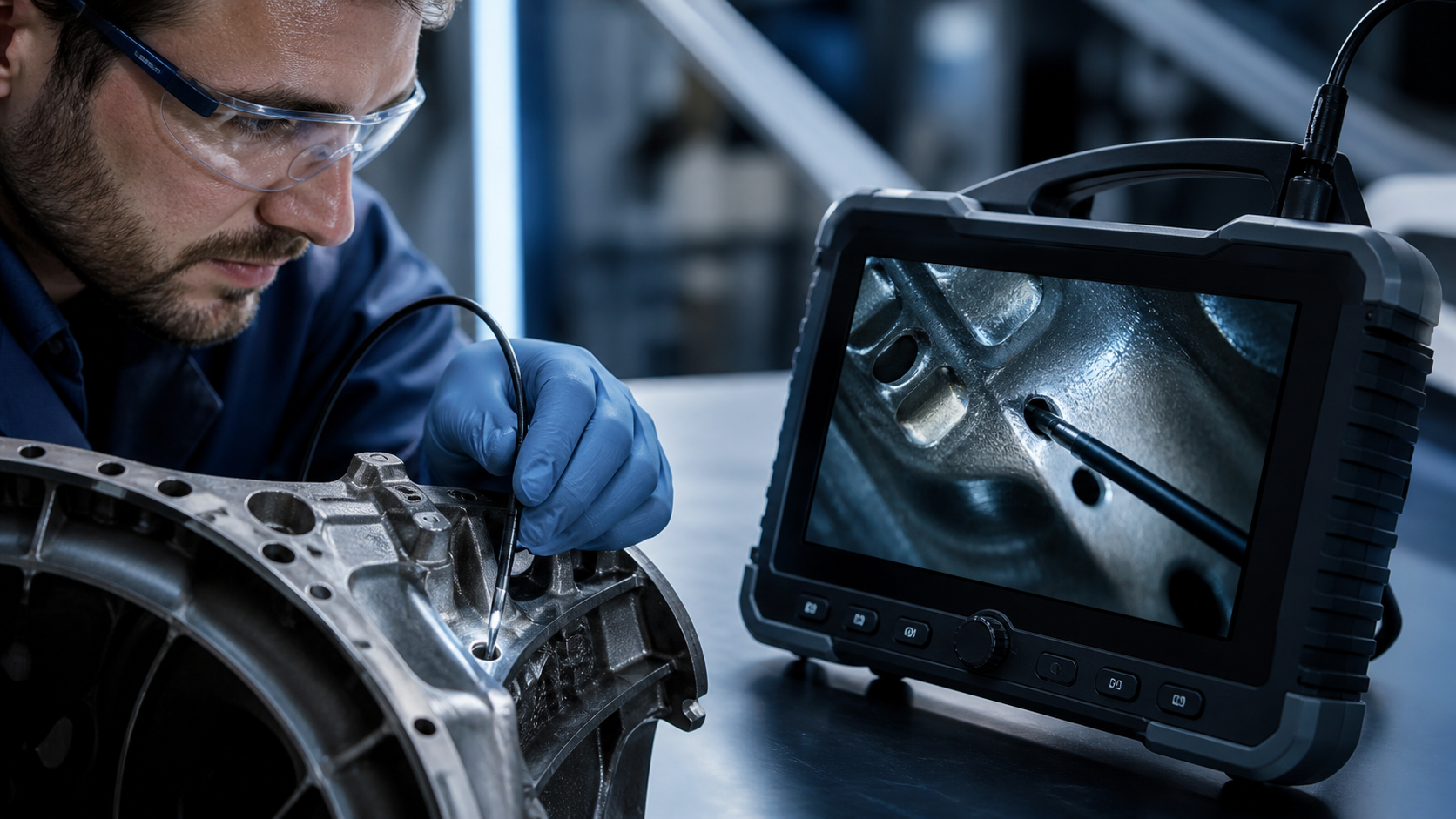
An ultra-fine visual channel supports inspection of miniature cooling paths and precision hardware.
READ MORE arrow_forward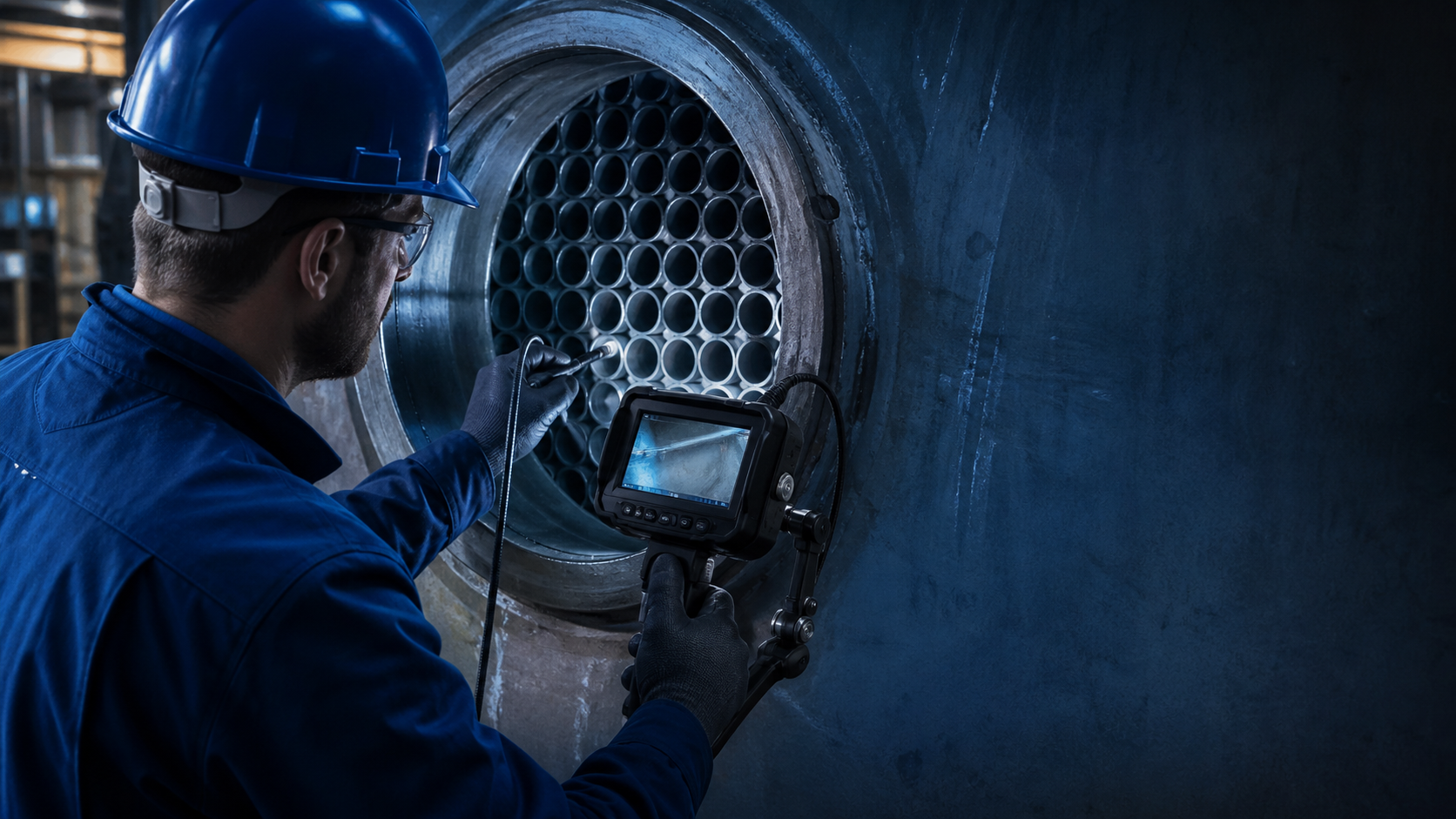
A robust rotary camera head supports observation in large boilers, vessels and pipe headers.
READ MORE arrow_forward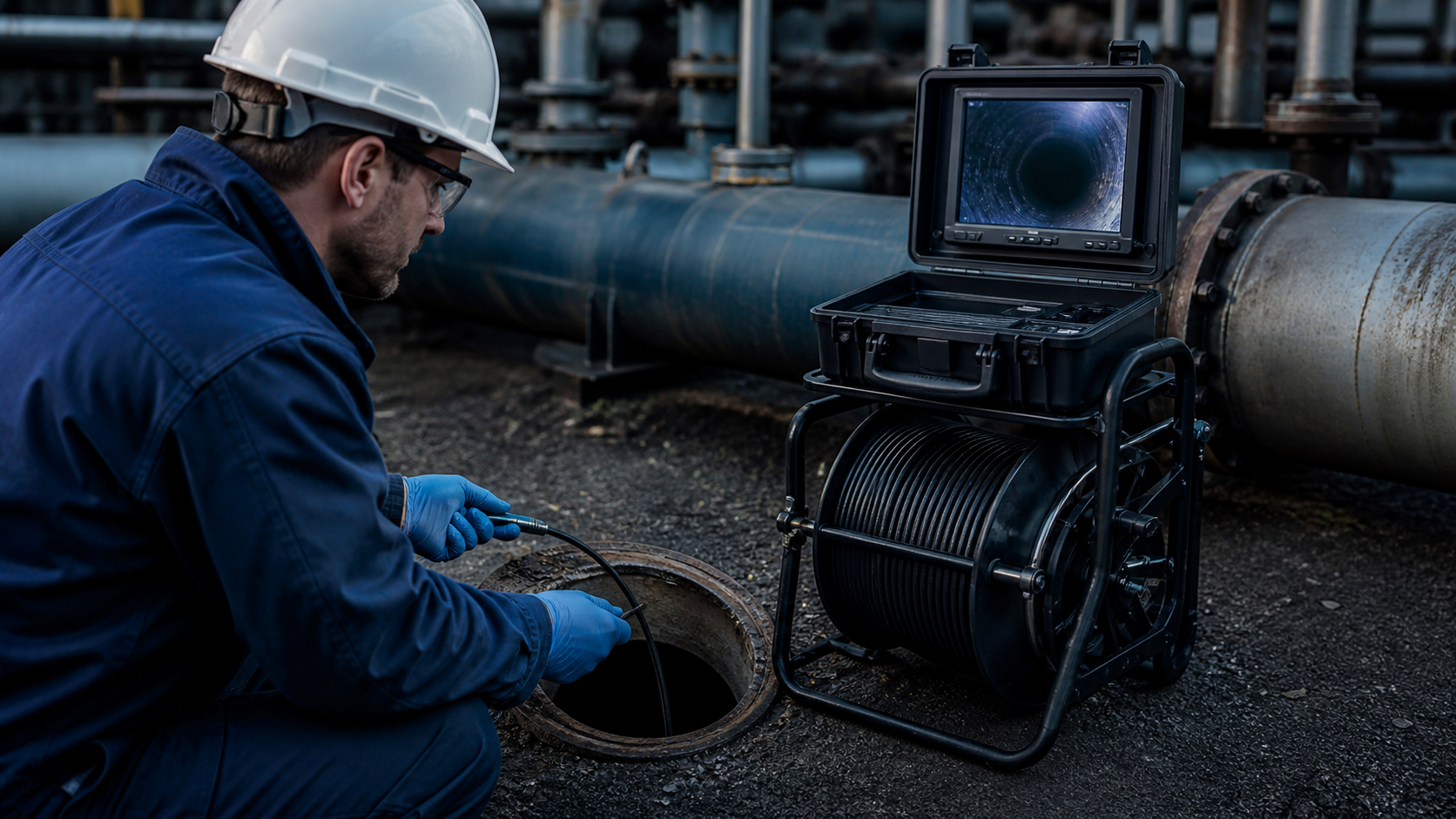
Long-distance visual access combines cable management, controlled camera direction and reliable retrieval.
READ MORE arrow_forward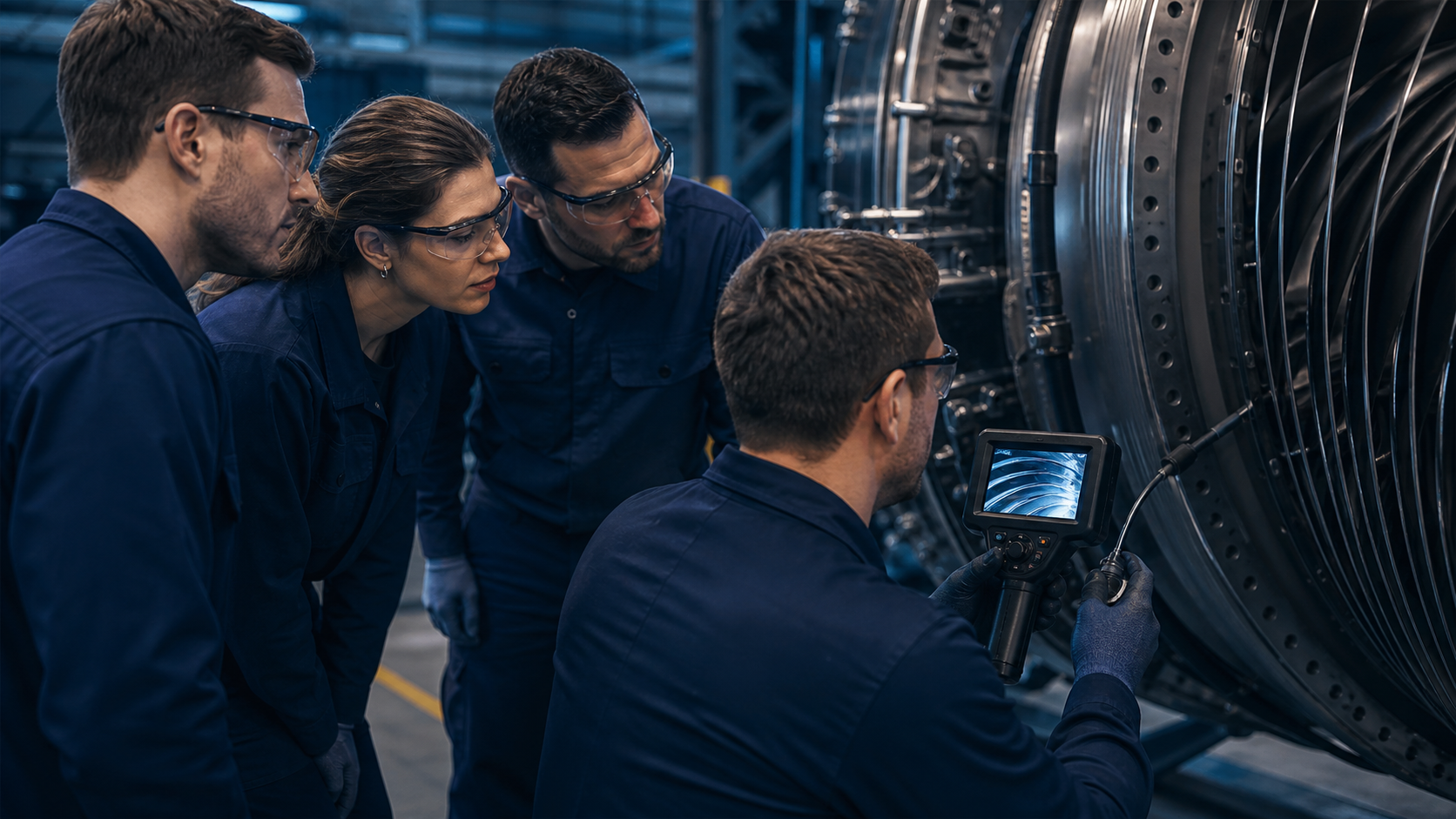
Hands-on practice aligns probe handling, image capture and review standards across an inspection team.
READ MORE arrow_forward
Commissioning connects equipment configuration, operator training and a repeatable inspection route.
READ MORE arrow_forward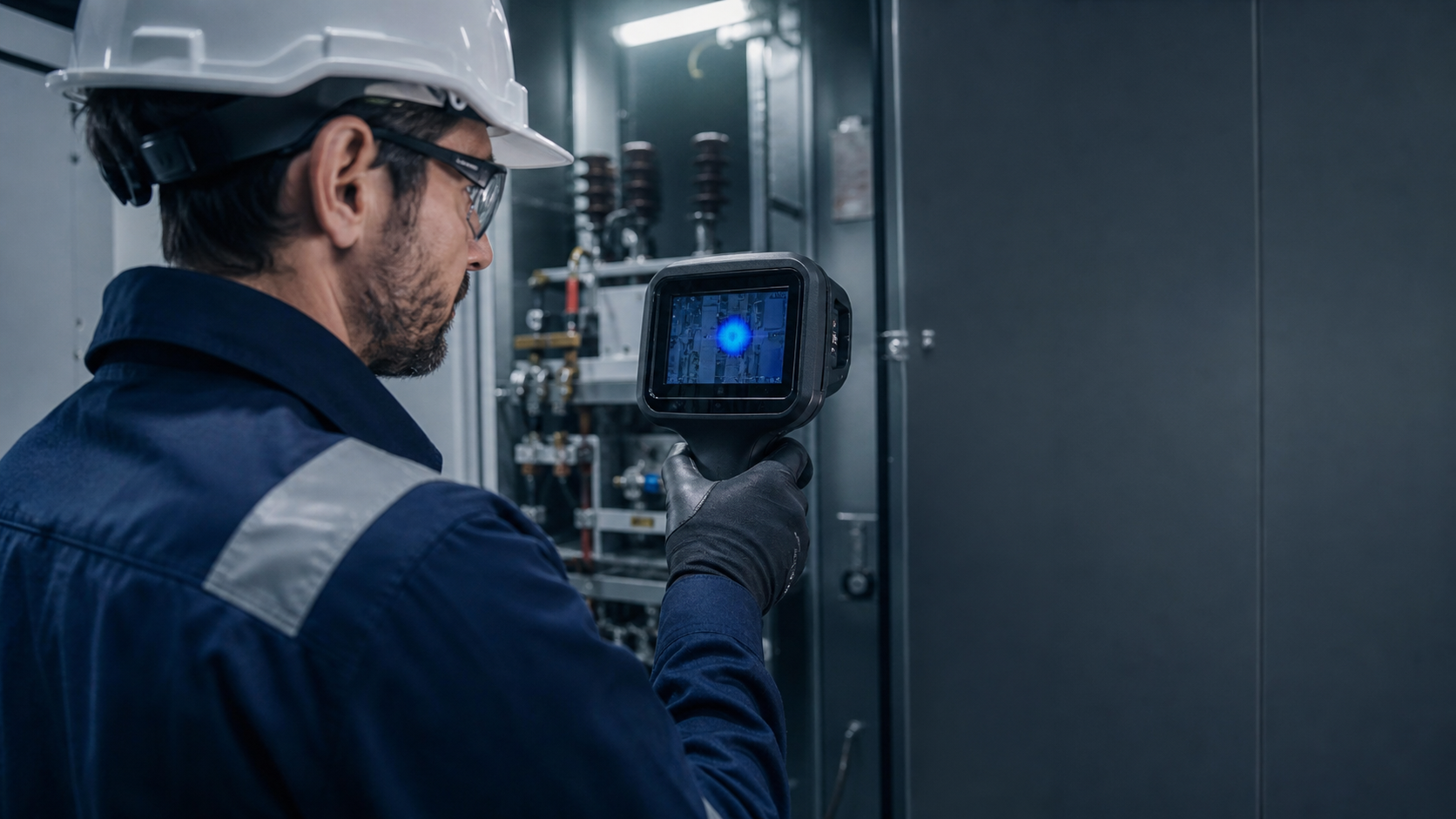
A mobile visual-acoustic workflow supports leak and partial-discharge screening across industrial sites.
READ MORE arrow_forwardNo articles in this category.