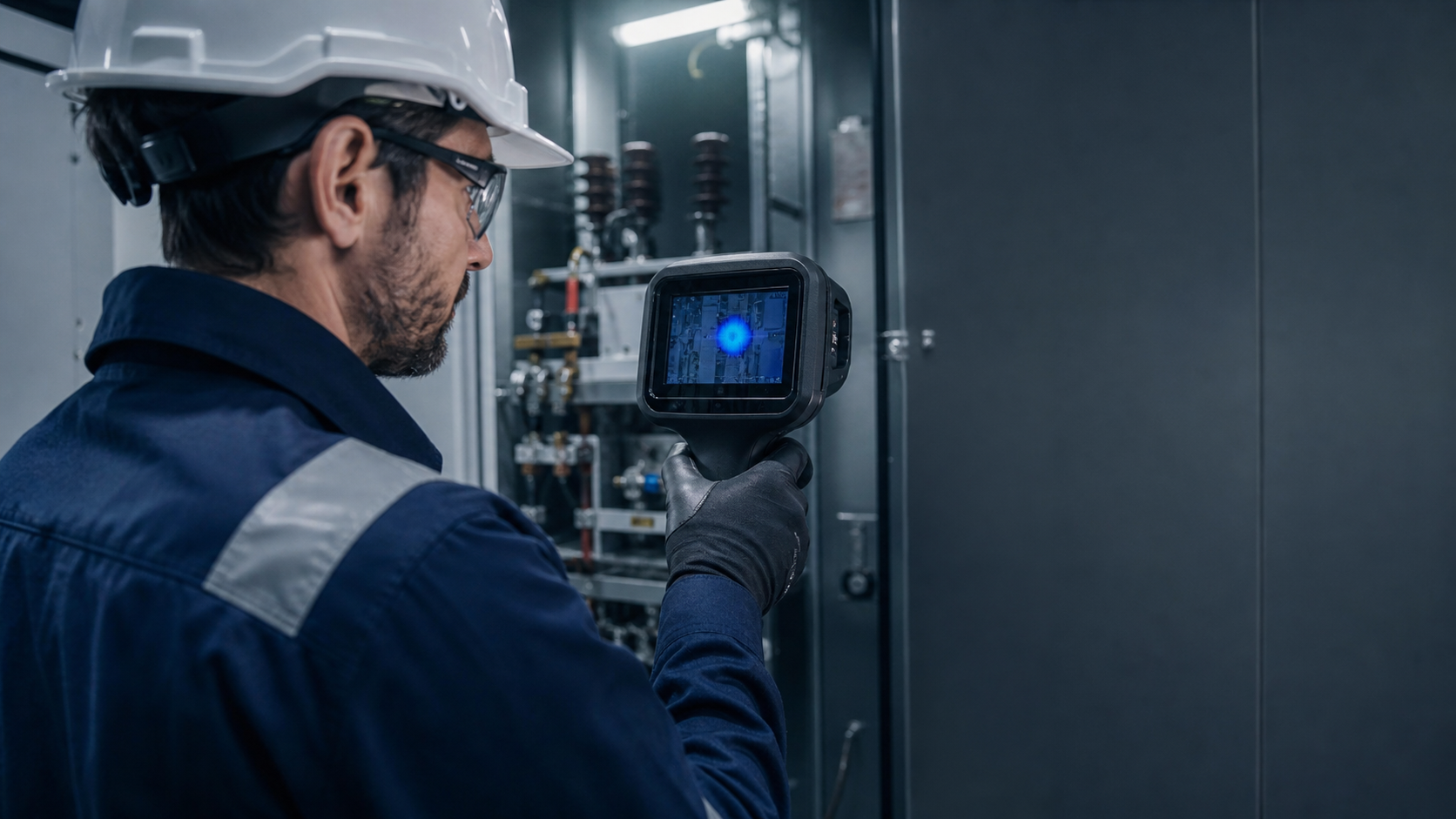
Turn the sound into a visible position.
Microphone arrays and visualization superimpose to help operators link abnormal sound sources to the location of on-site equipment.
Moving from screening to processing
Collecting images, equipment numbers and operating conditions to provide a basis for subsequent review and maintenance missions.
Project background
The “SVE series of acoustic imaging application updates” reflects a specific direction for industrial inspection products from technology development to field applications.Mobile acoustic visualization processes can be used for industrial site leakage and partial discharge screening.For equipment manufacturers and user units, the value of the product is reflected not only in the parameter table but also in the image quality, positioning capability, operational efficiency and long-term stability of the real work.Each product improvement, application validation or technology exchange should revolve around the testing issues that clients need to address.
Actual needs-oriented validation
The R & D and application teams will establish testing programmes in areas such as target detection, field environment, access conditions, target size, work distance and evidentiary requirements.industrial borescope focuses on validation of the passivity, shift control, lighting, image details and recording process;acoustic imaging camera focuses on the identification of acoustic sources, positioning stability and inspection efficiency in different noise environments.Repeated validation of representative components and on-site work has made it possible to detect problems that are difficult to cover by laboratory tests.
Product and service synergies
Industrial customers usually need more than single-desk equipment, including selection advice, operational training, application methods, data downloads, maintenance calibration and continuous technical support.The team will provide configuration advice based on the client ‘ s target and workflow and, upon delivery, help the operator to master equipment set-up, evidence preservation and reporting methods.In case of a complex situation, the application engineer will also assist in identifying a more suitable detection route in conjunction with a sample or site information.
Continuous improvement process
On-site feedback will enter a follow-up improvement process, including software interface, image processing, annex adaptation, equipment structure and information description.For recurring issues, improvements need to be identified by distinguishing between different causes, such as operational methods, environmental constraints and product capacity.Recording problems, validating changes and returning the results of use can allow product upgrades to be truly responsive to client experience rather than remaining in the increase in functional numbers.
Towards long-term cooperation
GAREXON seeks to establish long-term cooperation with industrial enterprises, inspection agencies, maintenance teams, distributors and technical partners.Through open and transparent technical communication, traceability of evidence and timely service responses, users are helped to identify problems more efficiently, arrange maintenance and reduce unnecessary dismantling and shutdown.Relevant product information, application content and service information will be maintained on a continuous basis in the back of the website to facilitate timely and up-to-date information for clients.