Remote Visualization Test Tool
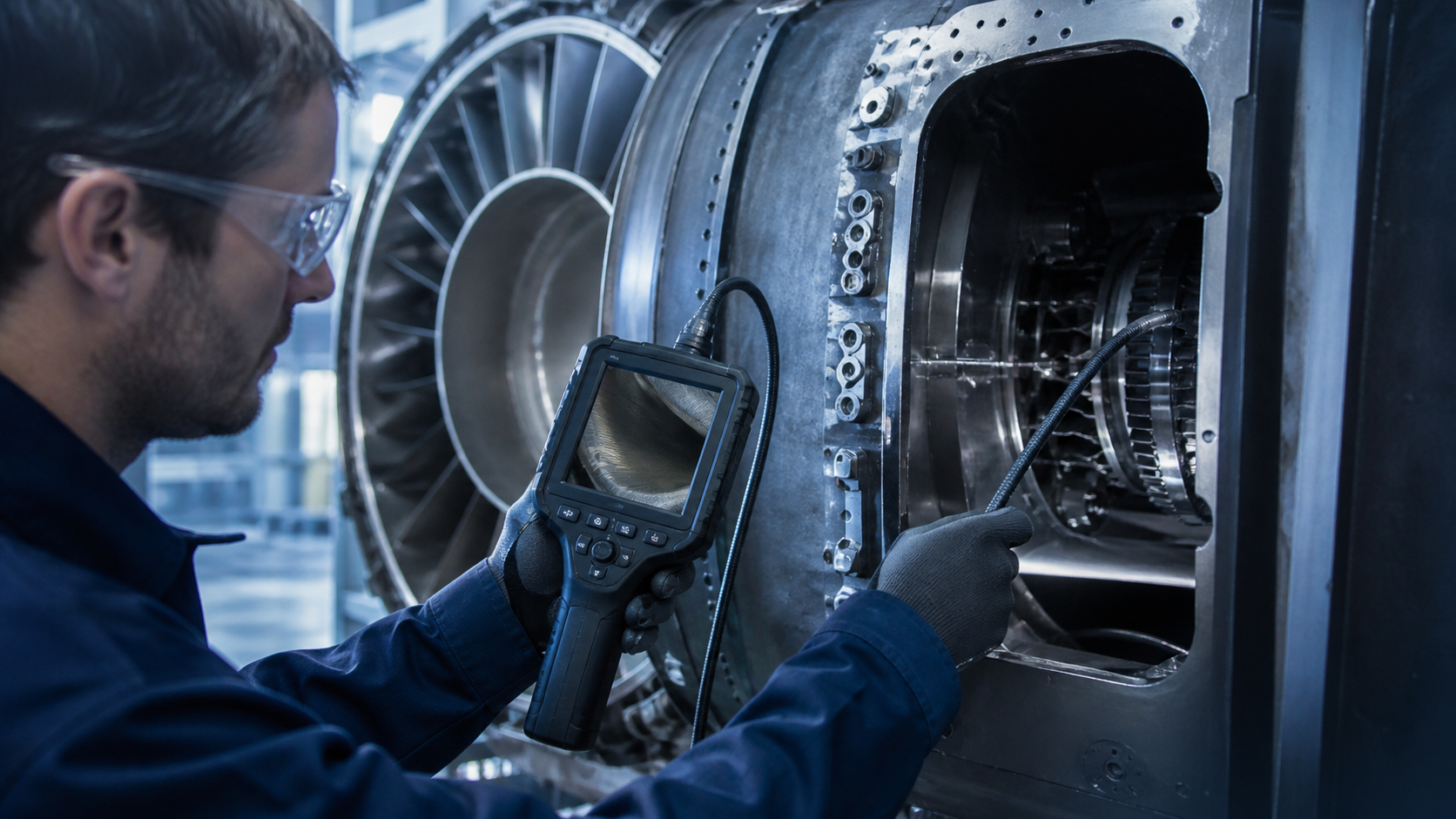
industrial borescope consists of small cameras, lighting, plugging tubes and display systems, which can be observed within limited access devices.
Configure according to task matching
The detection diameter, length, direction, vision and recording function shall be selected according to the actual component and the detection route.
Industry background
“What’s an endoscope?The issues involved are usually directly related to equipment reliability, production continuity, energy management or quality control.industrial borescope brought the camera and lighting inside the equipment that could not be directly observed.At the industrial site, the single detection of anomalies does not amount to the completion of a test mission, but also requires the identification of the anomaly, recording of the operation, assessment of the impact range and transmission of the results to the maintenance and engineering team.Only when a closed ring is formed, from discovery, recognition to processing and retroactivity, can the detection work really be of value.
Establish a test plan
Before testing is carried out, lists of equipment, process processes and historical failure records should be compiled, and priorities should be based on risks, downtime effects and accessibility.Routes should cover key connecting points, rotation equipment, pressure systems and internal areas that are difficult to observe directly.For industrial borescope, clear access, length, diversion and lighting conditions are required;For acoustic imaging camera, background noise, distance, load and possible sources of interference need to be considered.
Regulate on-site records
The operator shall be the recorder device number, location, time, operational status and test parameters for each discovery, and shall maintain a panorama showing the environment and a proximate view showing details.The leakage, partial discharge or abnormal acoustic sources should be identified at different distances and angles;For internal cracks, corrosives, wear and tear, or foreign matter, the direction and size of the observation reference shall be recorded.Uniform naming rules can reduce the cost of subsequent search and communication.
Assessment and processing
The results should be graded according to safety, quality, energy loss and production impact.High-risk projects need to be scheduled for review and processing as soon as possible, and projects that can be completed in conjunction with planned downtime should be brought into the maintenance plan.Once the maintenance is completed, the same route and proximity parameters are re-measured to determine the effectiveness of the treatment and to provide comparable evidence for subsequent trend analysis.For findings that may not be identified at the moment, original data should be retained and reviewed jointly by the relevant professionals.
Continuous optimization of the inspection system
As records build up, the enterprise can gradually optimize the inspection cycle, spare parts arrangements and equipment retrofitting programme by analysing the problem position of the high frequency, repeat the cause of failure and maintenance effects.Standardized industrial inspection not only helps teams to detect problems earlier, but also reduces ineffective dismantling, shortens routing and improves inter-sectoral collaboration.The integration of test data into the asset management process will allow evidence on-site to sustain more reliable maintenance decisions.