
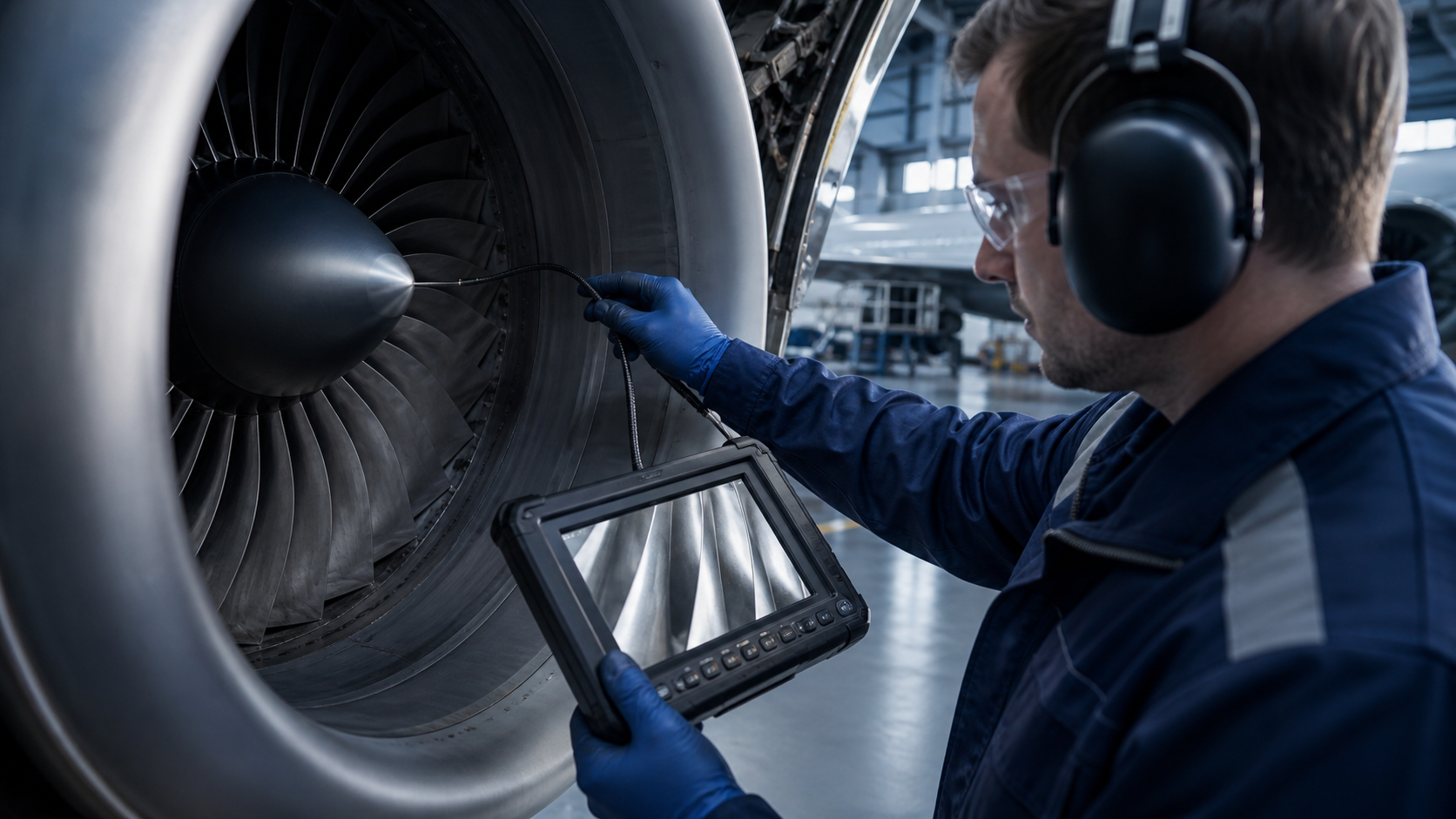
Define the inspection route
Identify access points, blade rows, viewing directions and required evidence before work begins.
Build a condition baseline
Consistent images and location labels allow engineering teams to compare condition changes across maintenance cycles.
Industry context
The issue described in “Borescope inspection of engines” is normally connected to reliability, production continuity, energy management or quality control. A repeatable route helps document blades, chambers and internal surfaces during limited maintenance windows. Finding an anomaly is only the first step. A useful inspection must confirm the location, record the operating condition, assess the potential effect and communicate the result to maintenance and engineering. The work creates value when discovery, verification, corrective action and follow-up testing form a traceable loop.
Building an inspection plan
Begin with the asset list, process flow and maintenance history, then assign priority according to risk, downtime impact and access. A route should cover critical connections, rotating equipment, pressure systems and internal areas that cannot be observed directly. Borescope planning must consider entry diameter, length, articulation and lighting. Acoustic-imaging planning must consider background noise, distance, operating load and possible interfering sources. Defined objectives help the team choose suitable equipment and avoid collecting unrelated data.
Recording field evidence
For every finding, record the asset identifier, exact location, time, operating state and inspection settings. Keep an overview that explains the environment and a close view that shows the relevant detail. Leaks, partial discharge and abnormal sound should be confirmed from more than one distance or angle. Internal cracks, corrosion, wear or foreign objects should include viewing direction and a size reference where practical. Consistent file names and route positions reduce the time needed for later review.
Assessment and corrective work
Classify findings according to safety, quality, energy loss and production impact. High-priority conditions require prompt verification and action, while items suitable for a planned shutdown should enter the maintenance schedule with clear evidence. After repair, repeat the route with comparable parameters. This verifies the result and creates evidence that can be compared in future surveys. Ambiguous findings should retain original files and be reviewed by the relevant technical disciplines.
Improving the inspection program
As records accumulate, teams can identify recurring locations, common failure modes and the effectiveness of repairs. These trends support better inspection intervals, spare-parts planning and engineering modifications. A standardized inspection program helps find problems earlier, reduces unnecessary teardown, shortens troubleshooting and improves cooperation between operations, maintenance and engineering. Linking evidence to the asset-management process allows every survey to support more reliable long-term decisions.