
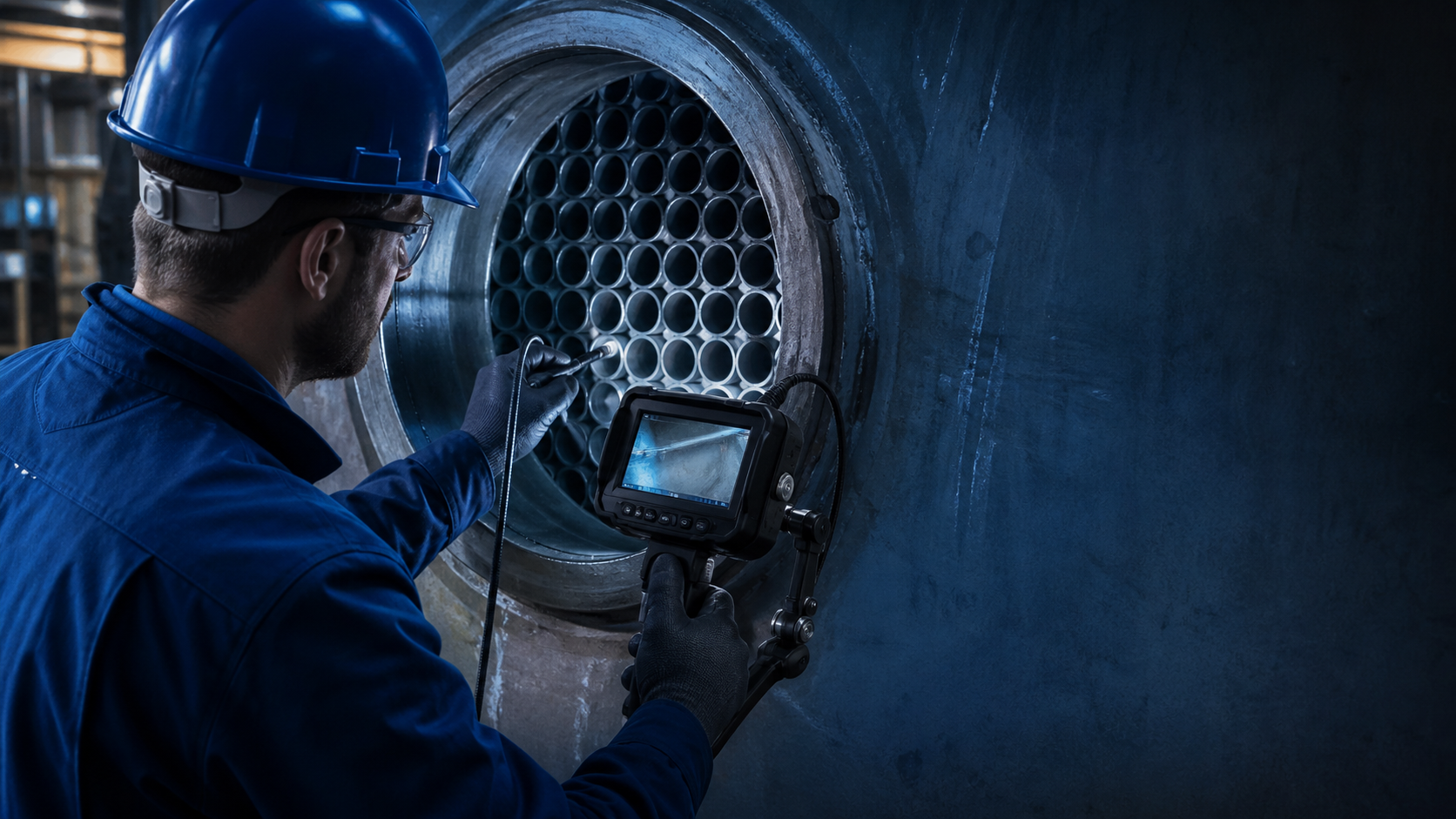
Built for larger internal spaces
A larger rotary head provides controllable viewing direction where a flexible micro-probe is not the best match.
Focus on surfaces of interest
Rotation and focus adjustment help operators observe welds, deposits and internal surfaces from multiple angles.
Project background
“33 mm rotary-focus inspection camera for large equipment” represents a practical step in bringing industrial inspection technology from development into field use. A robust rotary camera head supports observation in large boilers, vessels and pipe headers. Product value is not defined by a specification sheet alone. Customers judge image quality, localization capability, operating efficiency and long-term stability under real working conditions. Product improvements, application validation and technical communication therefore need to remain connected to the inspection problem a customer is trying to solve.
Validation against real requirements
Development and application teams build tests around the asset, environment, access route, target size, working distance and evidence requirements. Borescope validation covers probe access, articulation, illumination, detail and recording workflow. Acoustic-imaging validation covers source recognition, localization stability and route efficiency in different noise conditions. Repeated work with representative components and field conditions reveals limitations that a simple laboratory demonstration may not show.
Combining products and service
Industrial customers usually need more than a device. Selection advice, operator training, application methods, downloadable documentation, repair, calibration and continuing technical support are all part of a dependable implementation. The team recommends a configuration based on the customer’s asset and workflow, then helps operators understand settings, evidence capture and reporting. For difficult conditions, application engineers can review samples or field information and help define a more suitable route.
A continuous improvement process
Field feedback is reviewed for possible improvements to software, image processing, accessory compatibility, equipment structure and documentation. Repeated problems should be separated into operating method, environmental limitation and product capability before a corrective action is selected. Recording the issue, validating the modification and following up on the result ensures that an upgrade improves the customer experience instead of merely increasing the number of listed functions.
Building long-term cooperation
GAREXON aims to work over the long term with industrial companies, inspection organizations, maintenance teams, distributors and technical partners. Clear technical communication, traceable evidence and responsive service help users identify conditions efficiently, plan maintenance and reduce unnecessary teardown or downtime. Product information, application material and service documentation remain editable in the website backend so customers can receive current information as the portfolio and support system develop.